Best Nightstand Gun Safes: Secure but Ready
By AGO
August 10, 2026
Last updated: August 15, 2026
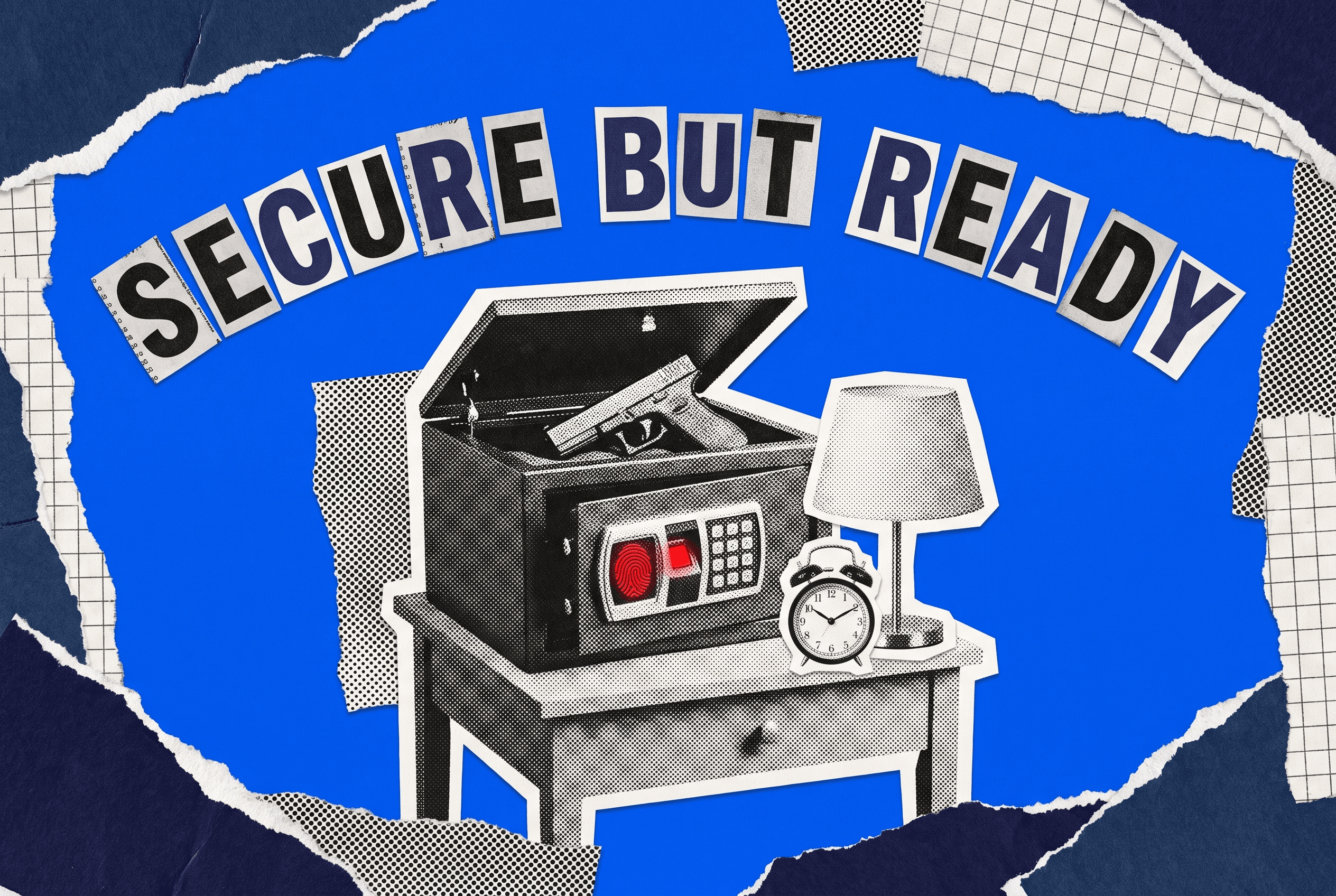
The best nightstand gun safe is a bolted-down, quick-access model with a biometric or keypad lock that opens in a second or two. It keeps a firearm secured and out of the wrong hands while staying reachable when you want it.
The whole point of a nightstand safe is a setup that stays locked yet opens fast, and the market makes that harder than it should be with dozens of models. The choice is simpler than the product pages suggest once you know what to look at.
Once you know the lock types and the handful of features that matter, picking one gets easy. If a home setup is what you are building, our guide to the best home defense gun for first-time owners pairs naturally with this.
Key takeaways
- The best nightstand safe is a quick-access biometric or keypad model that opens in a second or two and bolts to the nightstand or floor.
- Lock type is the biggest decision: biometric is fastest when it reads cleanly, keypad is the most consistent, and a mechanical lock never needs batteries.
- Bolting the safe down matters as much as the lock, since an unsecured box can simply be carried off and opened later.
- Match the safe to your priority: fast access for a bedside gun, or maximum protection for long-term storage.
- New to all of this? American Gun Owners includes a protective case and a safety cable in every kit, so you start with a way to lock the firearm up from day one.
What is the best nightstand gun safe?
The best nightstand gun safe is a quick-access model with a biometric or keypad lock, bolted down, that opens in a second or two. It gives you fast access to a bedside firearm while keeping it locked to everyone else. For a nightstand, speed of access is the whole reason the safe exists, so a slow dial safe belongs in the closet, not next to the bed.
More new owners are locking their firearms up than a few years ago, which is exactly the habit a nightstand safe supports. Only 8.2% of first-time buyers store a firearm unsecured and loaded, down sharply from 2020, per NSSF's First-Time Gun Buyers research. A quick-access safe is how you keep a gun reachable without leaving it out, and the push toward secure storage is broad: programs like NSSF's Project ChildSafe have distributed more than 42 million free gun locks nationwide, per NSSF.
Quick-access safe lock types compared
Nightstand safes are defined by their lock type, and each one trades access speed against reliability. The table below compares the four you will actually shop for, so you can match one to how you think under pressure. Most first-time owners land on a biometric or keypad model, with a mechanical option for anyone who wants zero battery dependence.
| Lock type | Access speed | Battery | Pros | Cons |
|---|---|---|---|---|
| Biometric (fingerprint) | Fastest when it reads cleanly | Needed | No code to recall under pressure | Can misread a wet or angled finger; false rejects are the top complaint |
| Keypad or PIN | Fast and consistent | Needed | Reliable, and a code can be shared with a partner | A code can be watched or forgotten |
| RFID (fob or card) | Very fast, a simple tap | Needed | Quick if the fob rides on you | Useless if the fob is left elsewhere or misplaced |
| Mechanical push-button | Fast with practice | None | Never fails from a dead battery | The button sequence must be memorized; buttons wear over years |
The honest read is that no single lock wins outright. Biometric is fastest on a good day, keypad is the most dependable, and mechanical is the one that never leaves you locked out at the worst moment. Pick the one whose weakness you can live with.
What should you look for in a nightstand safe?
Look for fast access, a real security rating, a way to bolt it down, and a battery backup, in that order for a bedside safe. Those few features separate a safe you can rely on from a metal box with a lock glued on. The table below turns them into a quick checklist you can take shopping.
| Criterion | Why it matters |
|---|---|
| Access speed | The reason it lives on a nightstand; a safe that takes 20 seconds defeats its own purpose |
| Security rating | Look for a real lock or construction rating, not "heavy-duty" marketing language |
| Restricted access | Only you should be able to open it; keep the code or your enrolled prints private |
| Mounting and bolt-down | An unsecured safe can be carried off; look for holes to bolt it to the frame or floor |
| Battery backup | Any electronic lock needs a stated battery life and a backup key for the dead-battery moment |
| State storage rule | Some states require firearms to be secured; confirm what your state asks for |
Run a candidate safe against this list before you buy, and most of the marketing noise falls away. The best nightstand safe for you is the one that opens fast for you and stays shut for everyone else.
How fast should a nightstand safe open?
A good nightstand safe opens in about one to three seconds, fast enough to be useful at your bedside without sacrificing access control. That window is why quick-access models exist: they trade the heavy door of a full safe for speed. If a safe is slower than that, it belongs in a closet for long-term storage, not on the nightstand.
Speed only counts if it is consistent, so practice opening the safe until it is second nature. A biometric that reads your print nine times out of ten is not fast enough for a bedside gun, which is why many owners test a model for a week before trusting it. Reliable access beats a slightly faster headline number every time.
Biometric or keypad: the more dependable lock
A keypad is generally the more dependable nightstand lock, while biometric is the faster one when it reads cleanly. Keypads have fewer ways to fail, since a code either works or it does not, and they let you share access with a partner. Biometric readers are quicker but can stumble on a wet, cold, or oddly angled finger, which is the most common owner complaint.
Many quality safes now offer both, a fingerprint reader with a keypad backup, which is a sensible middle ground for a first-time owner. Whichever you choose, enroll a backup method and keep the override key somewhere only you can reach. The goal is a lock you trust at 2 a.m. without thinking about it.
Where to put a nightstand safe and how to secure it
Put a nightstand safe within arm's reach of where you sleep, and bolt it to the nightstand, bed frame, or floor so it cannot be carried off. The best lock in the world does nothing if a would-be thief can pick up the whole box and open it later. Most quality safes include pre-drilled holes and hardware for exactly this.
Keep the safe out of sight of visitors and away from obvious spots, and mind the environment. An interior bedroom beats a garage, since heat and humidity swings can affect both the firearm and an electronic lock over time. A little thought about placement makes the safe both faster for you and harder for anyone else. It also helps to practice opening the safe in the dark and half awake, since that is the moment it needs to work smoothly. Run through the motion a few times until it is automatic, and check every few months that the safe is still bolted down and the batteries are fresh. A safe you can open without thinking is the one that truly earns its spot on the nightstand.
Do you need a nightstand safe if you already own a full safe?
Yes, a nightstand safe and a full safe solve different problems, so many owners use both. A large safe protects a collection and long-term storage from theft and fire, but its heavy door is too slow for a bedside gun. A quick-access nightstand safe fills that gap, giving you fast, controlled access to one firearm where you actually need it.
If you are just getting started and building your setup piece by piece, the storage question is part of the whole picture, not an afterthought. American Gun Owners includes a protective case and a safety cable with every kit, so you begin with a way to lock the firearm up, and you can add a quick-access safe as your setup grows. You can see what comes in an all-in-one kit or start with the Find My Gun Kit quiz.
Frequently Asked Questions
Are biometric gun safes reliable?
Biometric gun safes are reliable enough for many owners, but they can occasionally misread a finger, which is why a keypad or key backup matters. Quality models read cleanly most of the time and open fast. If you choose biometric, enroll more than one finger and test the safe for a week before you rely on it.
Can a gun safe be bolted to a nightstand?
Yes, most quick-access gun safes include pre-drilled holes and hardware to bolt them to a nightstand, bed frame, or floor. Bolting it down is one of the most important steps, since it stops someone from carrying the whole safe away. Check that a model offers mounting hardware before you buy it.
What is the fastest way to reach a gun at night?
The fastest controlled way to reach a gun at night is a bolted-down, quick-access safe on the nightstand with a lock you have practiced. Biometric and RFID models open in about a second, while a keypad takes a touch longer but is very consistent. Practice matters more than the headline speed.
Do nightstand safes need batteries?
Most nightstand safes with biometric, keypad, or RFID locks need batteries, so check the stated battery life and keep a backup key. A mechanical push-button safe is the exception, since it uses no electronics at all. For any electronic safe, replace the batteries on a schedule rather than waiting for a warning.
Is a lockbox the same as a gun safe?
A lockbox is a small, portable version of a gun safe, usually with a simpler lock and thinner walls. For a nightstand, a quality quick-access lockbox can work well if it bolts down and opens fast. A full safe offers more theft and fire protection but is too slow and heavy for bedside use.
Fast access, fully in control
The best nightstand gun safe is simply the one that opens fast for you and stays locked to everyone else, bolted down and matched to how you think under pressure. Pick your lock type, run the feature checklist, and secure it to the frame. Do that, and you get the quiet confidence of a firearm that is both reachable and controlled. When you want the whole setup matched to you, the Find My Gun Kit quiz is here.
Sources
[National Shooting Sports Foundation] (https://www.nssf.org/research/first-time-gun-buyers/), First-Time Gun Buyers Industry Research Report
National Shooting Sports Foundation, Project ChildSafe Safety Sweepstakes (2026)
Related
The Best Home Defense Gun for First-Time Owners
The Rise in Home Defense: What New Gun Owners Should Know
Is There an All-in-One Gun Kit for First-Time Buyers?
What You Actually Need to Buy Your First Gun: A Checklist
Requirements for buying, owning, and storing a firearm vary by state and can change, so confirm what applies where you live.