Can You Buy a Gun With a Credit Card?
By AGO
August 26, 2026
Last updated: September 1, 2026
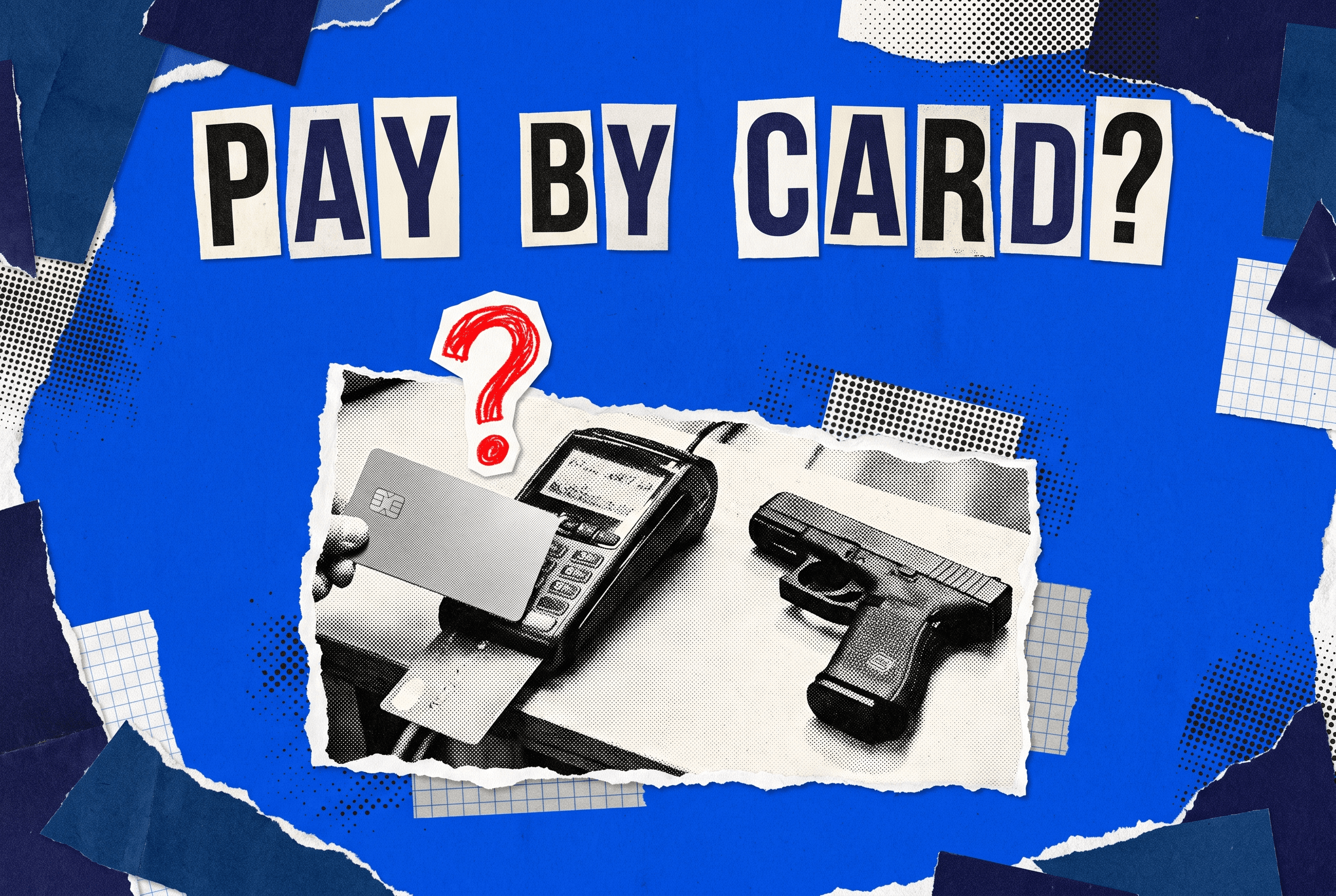
Yes, you can legally buy a gun with a credit card at a licensed dealer, since no federal law restricts how you pay, only who is eligible to buy. Payment and eligibility are two separate steps, and the background check decides the second one.
Headlines about credit cards and gun purchases leave a lot of buyers unsure. The short answer is simple, and the details around it are easier to follow than the news makes them sound.
This guide covers how paying by card works and how the options compare. If the dealer step itself is new to you, our guide to what an FFL dealer is covers the basics.
Key takeaways
-
You can legally buy a gun with a credit card; no federal law restricts the payment method, only buyer eligibility.
-
The buying process is identical no matter how you pay: Form 4473, a NICS background check, and in-person pickup.
-
A firearms merchant category code exists in a few places, but it flags the store type and total, not an itemized list of what you bought.
-
Third-party apps like PayPal and most buy-now-pay-later services exclude firearms, which is why dealers use gun-friendly card processors.
-
New to all of this? American Gun Owners makes the whole purchase, including payment and the dealer transfer, clear from the start.
Can you buy a gun with a credit card?
Yes, you can buy a gun with a credit card, and it is one of the most common ways people pay, both in stores and online. No federal law, ATF rule, or background-check step limits how you pay. Those rules govern whether you are eligible to buy, which the background check confirms. How you settle the bill is a separate matter between you and the dealer.
Because payment and eligibility are unrelated, a card works the same as cash or a debit card at the point of sale. Most dealers accept major cards, and online firearm retailers that partner with local dealers do too. The card handles the money, while the federal process handles who can legally take the gun home.
Does the payment method change the buying process?
No, the payment method does not change the buying process at all, since the federal steps are the same whether you pay by card, debit, or cash. Every dealer sale runs through ATF Form 4473 and a NICS background check, per the FBI, and you complete both in person before taking the firearm. Paying by card does not add a step, skip one, or change the outcome.
This holds true for online purchases too. Buying online does not let you bypass the dealer, since the firearm still ships to a licensed dealer near you for the same paperwork and background check. Our guide to how the background check works explains that step, which is identical regardless of payment.
Credit, debit, or cash: how they compare
Credit, debit, and cash all work for a gun purchase, and they differ mainly in rewards, protection, and privacy. Each is a legitimate way to pay, so the right one comes down to your preferences. The table below compares the everyday tradeoffs so you can choose with confidence.
| Payment method | Pros | Cons |
|---|---|---|
| Credit card | Widely accepted, earns rewards, and gives you dispute and purchase-protection rights if an order goes wrong; fastest for an online order | Some dealers add a processing surcharge; classifiable by merchant category where a firearms code is active |
| Debit card | Accepted almost everywhere a credit card is, pulls funds directly, no bill to carry | Weaker dispute protection than credit, no rewards |
| Cash | No card-network record, sometimes a small cash discount, no surcharge | Not usable for online orders, no purchase protection if something goes wrong with the order |
| Payment apps and buy-now-pay-later | Not a workable path for firearms | PayPal, most digital wallets, and BNPL apps exclude firearm transactions in their own policies |
The practical takeaway is that credit and debit are the smoothest options, especially online, while cash is the most private and only works in person. None of them changes your eligibility or the process. Pick the one that fits how you like to pay.
Do credit card companies track gun purchases?
Credit card companies can see that a purchase happened at a firearms retailer where a special merchant code is active, but they do not see what you bought. A few years ago a dedicated merchant category code for gun and ammunition stores was approved, then paused by the major networks amid conflicting state laws. Today it is active mainly in California, per California AB 1587, and inconsistent elsewhere.
The useful thing to understand is what the code actually does. It classifies the store type and the total amount, the same way your statement already shows a grocery store and a total. It does not transmit an itemized list, so your issuer sees a firearms retailer and a dollar total, not a specific gun or box of ammunition. It is a category label, not a purchase ledger.
It also helps to separate two ideas that headlines tend to blur together. Whether a purchase is legal is one question, decided by the background check, and whether your bank can see it as a category is a completely different one, decided by the merchant code where it is active. Neither affects the other. Your eligibility to buy does not change based on how you pay, and your payment method does not change the federal process. Keeping those two straight is the fastest way to cut through the noise and feel settled about paying by card.
Why some payment apps will not work for guns
Some payment apps will not process firearm purchases because their own acceptable-use policies exclude the category, not because of any law. PayPal, Stripe, Square, and most buy-now-pay-later services restrict gun and ammunition transactions in their terms. That is a private company policy, separate from what is legal.
This is why licensed dealers use payment processors built for firearms rather than generic checkout tools, and why gun-specific processors exist at all. For you as a buyer, it simply means a standard credit or debit card is the reliable path, while a third-party wallet or an installment app usually is not. If a dealer's checkout does not take your app, this is why.
Buying a gun online with a card
You can buy a gun online with a credit card, and the card completes the online order while the firearm still ships to a licensed dealer for pickup. The payment and the transfer are two separate tracks. Your card pays the seller, and the receiving dealer runs your Form 4473 and background check in person before releasing the gun.
So paying online is fast and normal, but it never skips the dealer step. Plan for a transfer at a local dealer, bring a current ID, and complete the paperwork there. Our guide to buying a gun online step by step walks through the whole flow, payment included.
Paying for your first gun the simple way
The simplest way to pay for a first gun is with a standard credit or debit card, which every step of a modern purchase is built around. There is nothing unusual to arrange and no special account to open. A card handles the money while the dealer handles the federal process, and the two never get in each other's way.
American Gun Owners is built to make that whole path clear, from choosing a kit to payment to the dealer pickup. Instead of wondering whether your card will work or what happens next, you get a straightforward checkout and a guided transfer. Start with the Find My Gun Kit quiz to see how it comes together.
Frequently Asked Questions
Is it legal to buy a gun with a credit card?
Yes, it is legal to buy a gun with a credit card. No federal law restricts how you pay for a firearm; the rules govern who is eligible to buy, which the background check determines. A card is one of the most common ways people pay, both in stores and for online orders that transfer through a local dealer.
Do gun stores accept credit cards?
Most gun stores accept major credit cards, though some add a processing surcharge and a few prefer cash or debit. Dealers use payment processors set up for firearms, since generic checkout tools often exclude the category. It is worth asking a specific shop about surcharges, but card acceptance is common.
Can you use PayPal or Afterpay to buy a gun?
Generally no, because PayPal, most digital wallets, and buy-now-pay-later apps like Afterpay exclude firearm transactions in their own policies. This is a company policy, not a law. A standard credit or debit card processed through the dealer's firearms-friendly processor is the reliable way to pay.
Does the ATF know what you paid with?
No, the ATF does not track your payment method. Form 4473 records your identity and eligibility and the firearm details, not how you paid. The background check confirms whether you can legally buy, and payment happens separately between you and the dealer. Payment and the federal process are unconnected.
Is it better to buy a gun with cash or card?
Both work, so it comes down to your priorities. A card is convenient, earns rewards, and adds purchase protection, and it is required for online orders. Cash is the most private and can avoid a surcharge, but only works in person and offers no purchase protection. Choose the one that fits how you like to pay.
Check out and take it home
Buying a gun with a credit card is legal and common, and the payment method never changes the process: the same form, the same background check, the same in-person pickup. Pick the payment that fits you, credit and debit for convenience or cash for privacy, and the rest is routine. There is no special account to open and no unusual step to plan for, just the same checkout you use everywhere else, followed by the standard dealer pickup that every gun purchase involves. When you want a checkout and transfer that are clear from the start, the Find My Gun Kit quiz is here.
Sources
-
Federal Bureau of Investigation, About NICS: fbi.gov
-
California Legislature, AB 1587 (firearms merchant category code): leginfo.legislature.ca.gov
Related
"We strive to provide accurate, up-to-date information to help first-time firearm owners make informed decisions. Because laws and regulations vary and may change, always verify the requirements that apply to your location and follow safe firearm handling practices."