How Old Do You Have to Be to Buy a Handgun? Federal vs State
By AGO
August 10, 2026
Last updated: August 15, 2026
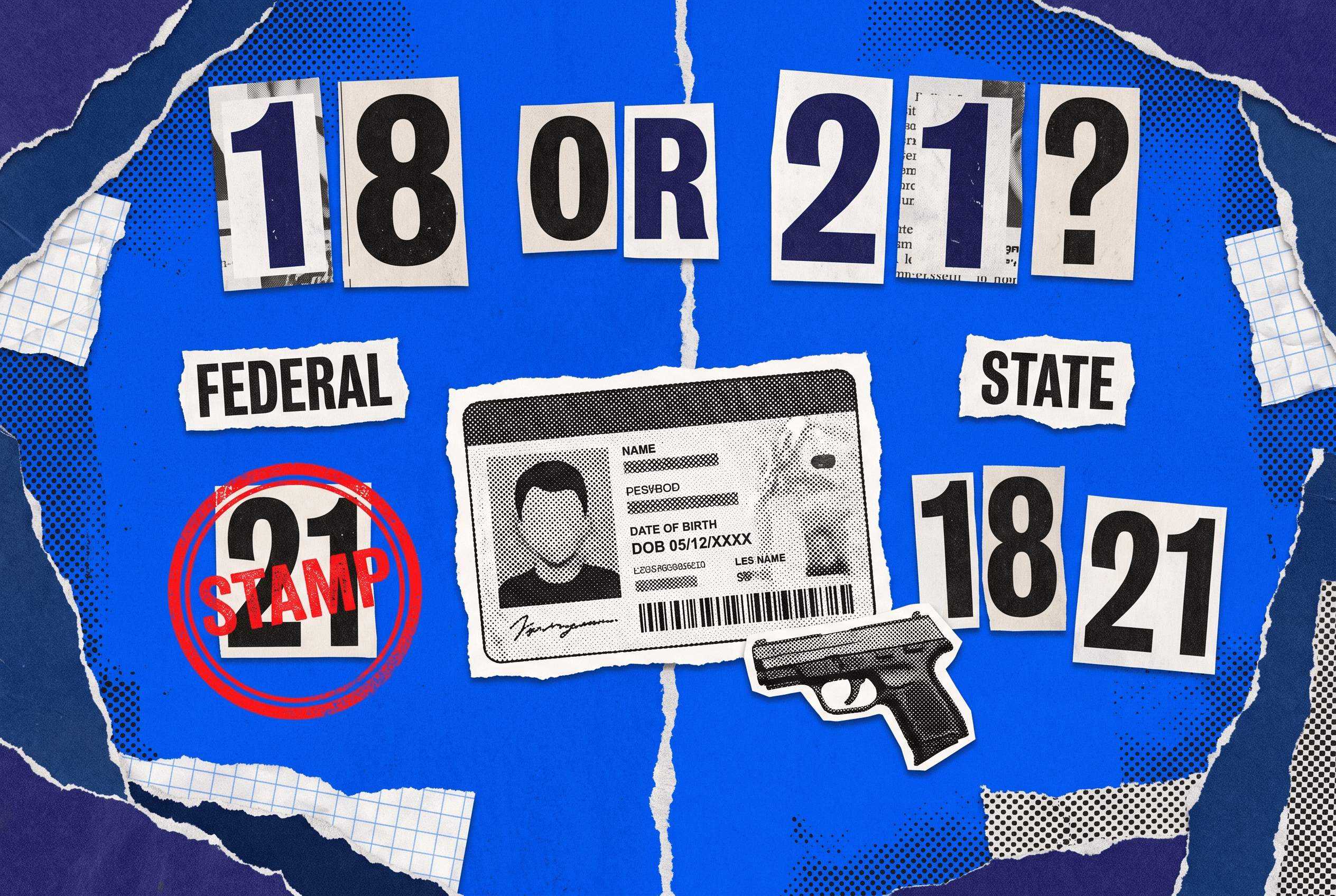
To buy a handgun from a licensed dealer you must be 21, while rifles and shotguns are 18. Some states set the bar higher, so your age and your state both decide when you can buy.
It is a fair thing to look up before you walk into a shop, and the answer is refreshingly clear once you separate federal law from state law. Here are the rules in plain English so you know exactly where you stand.
Knowing the age rule up front is one less thing to wonder about at the counter. More than 26.2 million Americans became first-time gun owners since 2020, per NSSF, so the age question is a common one. Our checklist of what you actually need to buy your first gun covers the rest of the picture.
Key takeaways
- From a licensed dealer, federal law sets the minimum at 21 to buy a handgun and 18 to buy a rifle or shotgun.
- Under federal law a private, non-dealer sale can transfer a handgun to someone 18 or older, though many states raise that to 21.
- A number of states raise the handgun purchase age to 21 even for private sales, so your state can set the bar higher than the federal floor.
- The federal 21 rule for dealer handgun sales is being challenged in court, but 21 remains the operative rule for ordinary buyers nationwide today.
- New to all of this? American Gun Owners confirms your state's rules automatically at checkout, so you can see what you qualify for without cross-checking charts yourself.
How old do you have to be to buy a handgun?
You must be 21 to buy a handgun from a licensed dealer, and 18 to buy a rifle or shotgun, under federal law. That single rule covers most first-time buyers, because most people buy from a licensed dealer. The age is tied to the type of firearm and the type of seller, and your state can add stricter rules on top.
The reason the answer feels confusing online is that two different federal rules exist: one for licensed dealers and one for private sellers. Sort those two apart and the picture gets simple fast. The table below lays out the full federal baseline in one place, sourced to the ATF.
Federal age rules at a glance
Federal law sets a minimum age for each combination of firearm type and seller type. Here is the whole baseline on one screen, so you can find your exact situation without digging through statutes.
| Scenario | Federal minimum age | Notes |
|---|---|---|
| Handgun from a licensed dealer | 21 | Gun Control Act of 1968; being litigated, but 21 in practice everywhere |
| Rifle or shotgun from a licensed dealer | 18 | Standard long-gun minimum |
| Handgun from a private seller | 18 | Federal floor; many states raise this to 21 |
| Rifle or shotgun from a private seller | No federal minimum | State law applies |
| Handgun ammunition from a dealer | 21 | Same threshold as a handgun |
| Rifle or shotgun ammunition from a dealer | 18 | Same threshold as a long gun |
Notice the pattern: handguns sit at 21 from a dealer, long guns at 18, and private sales run a little younger under federal law. Your state is the final word, so always confirm the rule where you live before you plan a purchase.
Why is the handgun age 21 but long guns 18?
Handguns are set at 21 and long guns at 18 because the Gun Control Act of 1968 drew that line for sales by licensed dealers. Congress treated handguns and long guns differently in the law, and that distinction has carried forward ever since. It is a legal category, not a comment on any individual buyer.
For a first-time buyer, the practical takeaway is simple. If you are 18 to 20, a rifle or shotgun is available to you from a dealer, while a handgun from a dealer waits until 21. Plenty of new owners start with a long gun for the home during those years, then add a handgun later. There is no wrong order, only what fits your plan.
Can an 18-year-old buy a handgun?
An 18-year-old generally cannot buy a handgun from a licensed dealer, but federal law does allow a private handgun sale to someone 18 or older where the state permits it. So it comes down to the seller and your state. From a dealer, the federal minimum is 21, full stop.
One wrinkle is worth knowing. A recent federal court case, Reese v. ATF, challenged the 21 rule for dealer handgun sales, and it is still working through the courts. For now, the relief is narrow and dealers are not selling handguns to buyers under 21, so treat 21 as the operative rule and confirm your state. This is general information, not legal advice.
If you are 18 to 20 and want to get started now, you still have real options. You can buy a rifle or shotgun from a dealer, which plenty of new owners choose for the home during those years, and in some states you may receive a handgun through a private sale or as a gift where the law allows it. Possessing a handgun you legally own is treated separately from buying one at a dealer, so the counter rule is not the whole story. Your state's page is the place to confirm what applies to you.
States that set a higher age
Some states raise the handgun purchase age to 21 across the board, closing the private-sale gap that federal law leaves open. If you live in one of these, 21 is your number regardless of who you buy from. The examples below show how the rules differ, and your own state's page is always the final check.
| State | Age to buy a handgun | Note |
|---|---|---|
| Florida | 21 | 21 for all firearms |
| Colorado | 21 | 21 for all firearms, since 2023 |
| Washington | 21 | 21 for handguns and semiautomatic rifles |
| Vermont | 21 | 21 general, with a narrow long-gun exception |
| Texas | 21 (federal) | No extra state age beyond the federal rule |
A number of states set 21 for handgun sales by any seller, not just dealer sales, and the exact list shifts over time. Because these rules change from time to time, check your state's official page before you count on a specific age. The trend over the past decade has generally moved toward 21 for handguns, so if you are close to the line, the surest assumption is that your state may require 21. A quick look at your state's firearm page settles it before you make any plans.
What proves your age at the counter
You prove your age with a valid, unexpired government photo ID, usually a driver's license or state ID, when you fill out the paperwork at a licensed dealer. The dealer checks your ID against the ATF Form 4473 you complete, then runs the federal background check. Your date of birth on that ID is what confirms you meet the age rule.
There is nothing to memorize and no test to pass. Bring a current ID that shows your name and date of birth, and you are set. If the whole counter process is new to you, our walkthrough of the ATF Form 4473 explains each box in plain language.
Once you meet the age, buying your first handgun
Once you meet the age rule, buying your first handgun comes down to picking the right one and completing the transfer through a licensed dealer. American Gun Owners was built to make that step certain rather than confusing. Our platform confirms your state's rules automatically, so a kit only shows up if it is legal for you where you live.
That means the age charts and state statutes are checked for you rather than left on your plate. You can let our Find My Gun Kit quiz match a state-legal setup to you, with the dealer transfer coordinated for you. The platform handles the compliance for you, so you do not have to memorize every rule.
Frequently Asked Questions
Can you buy a rifle or shotgun at 18?
Yes. Federal law lets an 18-year-old buy a rifle or shotgun from a licensed dealer, as long as no state rule sets a higher age. Long guns carry the 18 minimum, while handguns from a dealer are 21. Some states, such as Florida and Colorado, do raise the long-gun age to 21, so confirm your state.
Do you have to be 21 to buy handgun ammunition?
Yes. From a licensed dealer, handgun ammunition carries the same 21 minimum as a handgun, while rifle and shotgun ammunition is 18. The rule tracks the firearm type. A dealer checks your age for ammunition purchases the same way they do for firearms.
Does a private sale change the age you can buy a handgun?
Under federal law, a private, non-dealer seller can transfer a handgun to someone 18 or older, which is younger than the 21 dealer minimum. Many states close this gap and set 21 for every seller, though. Whether a private sale is an option at 18 depends entirely on your state's law.
Can you buy a handgun at 18 in Texas?
In practice, no. Even though a court case has challenged the federal 21 rule, dealers in Texas are not selling handguns to buyers under 21 while the case works through the courts. Treat 21 as the operative age for a dealer handgun purchase in Texas, and verify the current rule before you plan around it.
What ID do you need to prove your age?
You need a valid, unexpired government photo ID that shows your name and date of birth, most often a driver's license or state ID. The dealer uses it to verify your age on the ATF Form 4473. Make sure the ID is current, since an expired ID can hold up the purchase.
Clear on the age, ready to buy
The age rule is one of the simplest parts of buying your first gun once you see it laid out: 21 for a handgun from a dealer, 18 for a long gun, and a state check on top. Confirm your state, bring a current ID, and you are ready to go. Knowing the rule ahead of time is exactly the kind of small win that builds confidence. And if you are still a few years away from the handgun age, a rifle or shotgun is a perfectly good place to start, so there is a clear path forward no matter your age today. When you want the state rules handled for you, the Find My Gun Kit quiz is here.
Sources
Bureau of Alcohol, Tobacco, Firearms and Explosives, Minimum Age for Gun Sales and Transfers
National Shooting Sports Foundation, 26 Million New First-Time Gun Owners Since 2020 (Jan 2025)
Related
What You Actually Need to Buy Your First Gun: A Checklist
ATF Form 4473: Every Box on the Form, Explained
What Is an FFL Dealer? Your First Transfer, Explained
First-Time Gun Owner Statistics: Who Is Buying in 2026
Requirements for buying, owning, and storing a firearm vary by state and can change, so confirm what applies where you live.