How to Store a Gun at Home the Right Way
By AGO
August 18, 2026
Last updated: October 9, 2026
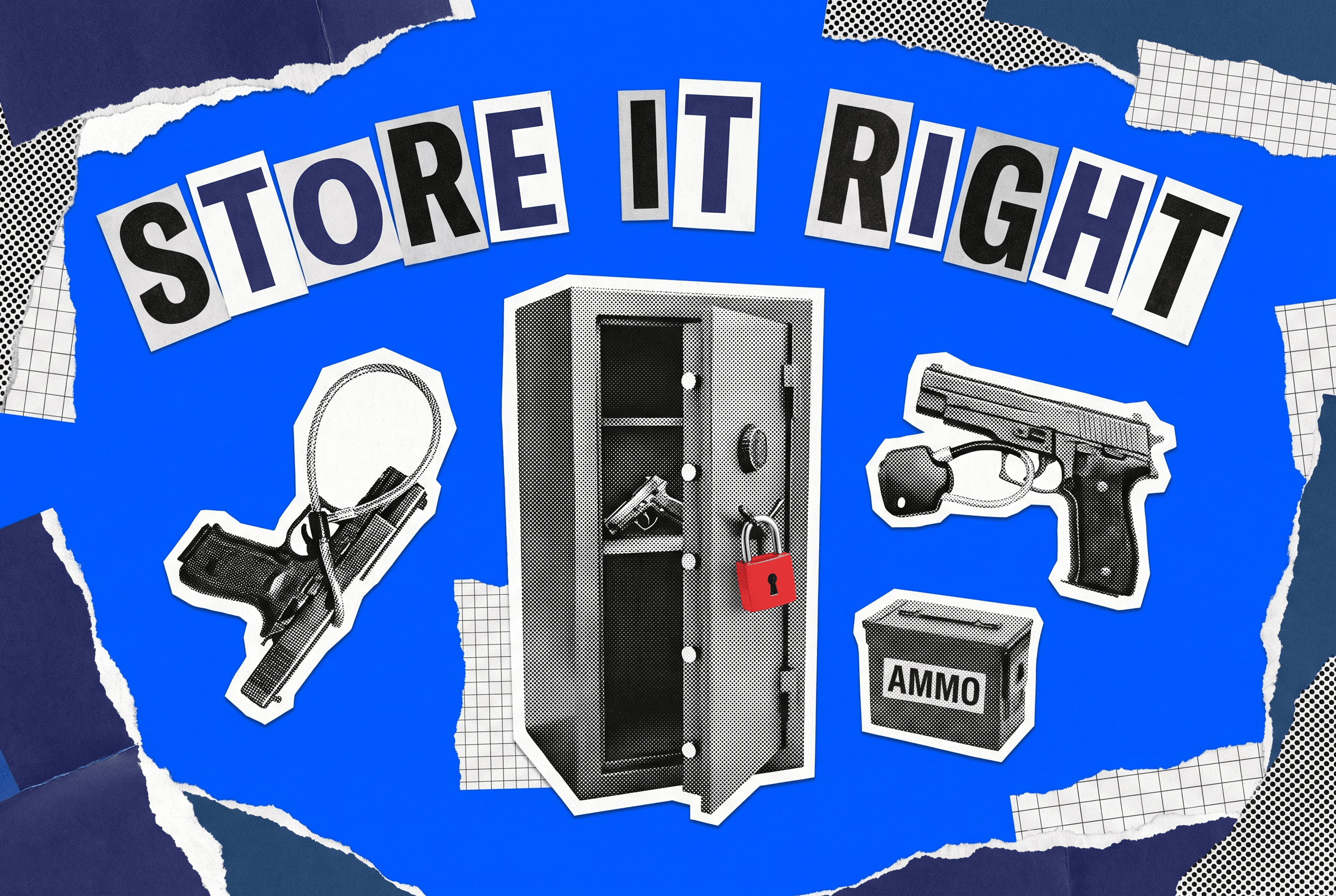
The best way to store a gun at home is locked in a container matched to how you use it, a quick-access lockbox for a bedside gun and a bolted-down gun vault for everything else. Keeping it locked and out of the wrong hands is the whole job, and the right container makes that easy.
The storage advice you keep finding is often either a sales pitch for one product or a wall of rules. Storage is simpler than that once you match the container to how you actually use the gun.
This guide covers your options and how to choose. If you are still setting up the rest of your gear, our checklist of what you actually need to buy your first gun pairs naturally with it.
Key takeaways
-
Store a gun locked in a container matched to your need: a quick-access lockbox for fast reach, a gun vault for long-term storage.
-
The baseline most guidance agrees on is to keep firearms locked and unloaded, with ammunition stored separately.
-
Where you put it matters: reachable if it is a bedside gun, out of common areas, and inside the home rather than a humid garage.
-
Locking guns up is the norm now, not the exception, with only 8.2% of first-time buyers keeping a firearm unsecured and loaded.
-
New to all of this? American Gun Owners includes a case and a cable lock in every kit, so you start with a way to lock the firearm up.
How should you store a gun at home?
You should store a gun at home locked in a secure container that matches how you use it, keeping it reachable to you and no one else. A quick-access lockbox suits a bedside gun you may want fast, while a gun vault protects long-term storage and several firearms from theft. The right choice depends on the gun's job, not on buying the biggest box.
Locking firearms up has become the norm among new owners, which makes the habit easy to adopt. Only 8.2% of first-time buyers keep a firearm unsecured and loaded, down sharply from 2020, per NSSF's First-Time Gun Buyers research. Start from the idea that every gun has a locked home, and the rest of the decisions get simple.
Home gun storage options compared
Home storage options range from a quick-access lockbox to a simple cable lock, and each trades security against speed and cost. The table below lays them out so you can match one to each firearm you own. Most owners end up with two, a quick-access lockbox for the gun they may need fast and a larger gun vault for the rest.
| Method | Security | Access speed | Best for | Cost tier |
|---|---|---|---|---|
| Quick-access lockbox | Moderate | Fast, a second or two | A bedside gun you may want fast | Low to mid |
| Gun vault (bolted down) | High | Slower | Long-term storage and several firearms | Mid to high |
| Lockable case | Low to moderate | Moderate | Transport and temporary storage | Low |
| Cable lock | Low | Slow to remove | A second layer, or a free starter option | Lowest, often free |
| Trigger lock | Low | Slow to remove | Same as a cable lock, often bundled with a purchase | Lowest, often free |
| Off-site storage | Highest separation | Not for daily use | A move, or a time you want a gun out of the house | Varies |
Notice that no single option is best for everything. A quick-access lockbox wins for a gun you may need in seconds, a gun vault wins for protection and capacity, and a cable lock is a fine free starting layer. Match the tool to the job. Want an extra layer on top of the cable lock in your kit? A combination lock or a small lockbox adds one with very little cost or effort.
Where should you keep a gun in your home?
You should keep a gun where it is reachable for its purpose but out of common areas, and inside the climate-controlled part of your home. A bedside gun belongs within arm's reach of where you sleep, while a stored gun belongs in an interior closet rather than a garage, since heat and humidity swings can rust a firearm and stress an electronic lock over time.
Keep the container out of obvious, easy-to-grab spots and out of sight of visitors. An interior wall beats an exterior one for both climate and theft exposure. A few minutes of thought about placement makes a gun faster for you to reach and harder for anyone else, which is exactly the balance you want. One more habit helps: keep where you store a gun to yourself. The fewer people who know exactly where, and how it is secured, the better your access control holds up, and you do not need an elaborate hiding spot to get there, just a locked container in a convenient, unremarkable place. It ties into the wider picture in our guide to home defense for new owners.
Locked and separate: the storage baseline
The baseline nearly all storage guidance agrees on is to keep firearms locked, keep them unloaded when they are put away, and store ammunition separately. That separation adds a simple buffer between the gun and anyone who should not handle it.
Keep the ammunition in its own spot, ideally locked as well, away from where the gun lives. A quick-access lockbox still lets you reach the gun fast while controlling who can open it.
How do you store a gun with others in the home?
When others share your home, the storage question is really an access question: the container should open for you and stay shut for everyone else. A locked container with a code or fingerprint only you use is how you keep control of who can reach a firearm. Cable and trigger locks add a second layer for guns in longer-term storage.
If kids live in your home or visit, keep every gun locked and out of their reach, every time. Keep your code or enrolled prints private, and store the override key where only you can reach it. If your household includes people who should never have access, a locked container is the tool that settles it cleanly. The goal is simple and calm: you can reach your gun, and no one else can.
Storage and your state's rules
Some states have secure-storage or access-prevention laws that set specific requirements, so it is worth confirming what your state asks for. A majority of states now have some form of storage-related law on the books, and the details vary widely on what counts as secured. Rather than assume a blanket rule, check your own state's official firearm page.
Programs like Project ChildSafe have distributed more than 42 million free locking devices through law enforcement partners across all 50 states, per NSSF, so a basic lock is often available at no cost. Meeting your state's requirement is usually straightforward once you know what it is.
Building storage into your setup from day one
The easiest way to get storage right is to plan for it from day one, rather than treating it as an afterthought once the gun is home. A firearm and a way to lock it up belong in the same shopping trip. Deciding where each gun will live before it arrives means you never have a gun sitting out while you figure it out.
That is part of why American Gun Owners includes a protective case and a cable lock with every kit, so you begin with a way to secure the firearm on arrival. You can add a combination lock or a quick-access lockbox as your setup grows. To see the whole starter picture, take a look at what comes in an all-in-one kit or start with the Find My Gun Kit quiz.
Frequently Asked Questions
What is the best way to store a gun at home?
The best way to store a gun at home is locked in a container matched to its purpose, a quick-access lockbox for a bedside gun and a gun vault for long-term storage. Keep it reachable to you and no one else, inside a climate-controlled space. Keep it unloaded when it is put away, with the ammunition stored separately.
Can you store a gun without a gun vault?
Yes, you can store a gun without a gun vault by using a lockable case, a cable lock, or a trigger lock to keep it secured. These are lower-cost options that still control access, and a cable lock is often available free through programs like Project ChildSafe. A quick-access lockbox or a combination lock is worth adding once your budget allows.
Where should you not keep a gun vault or lockbox?
Avoid putting a gun vault or lockbox in a humid or temperature-swinging spot like an unheated garage, or in an obvious, easy-to-grab location. Interior closets and walls are better for both climate and theft exposure. Keep it out of common areas and out of sight of visitors, and bolt a smaller lockbox down so it cannot be carried off.
Should ammunition be stored with the gun?
No. Store ammunition separately from the gun, and keep the gun unloaded when it is put away. Lock the gun in its case, lockbox, or vault, and keep the ammunition in its own spot away from it. That simple separation is the baseline nearly all storage guidance agrees on.
Do you legally have to lock up your guns?
It depends on your state, since a majority of states now have some form of secure-storage or access-prevention law, but the requirements vary. Some apply only in specific situations, such as when a minor could gain access. Because the details differ, confirm what your own state requires rather than assuming a single national rule.
A locked home for every gun
Storing a gun at home comes down to giving each firearm a locked home that matches its job, then putting it somewhere reachable for you and no one else. Pick your container, mind the placement and climate, and confirm your state's rule. Do that, and storage becomes a quiet, settled part of ownership. When you want a setup that includes a way to lock up from day one, the Find My Gun Kit quiz is here.
Sources
-
National Shooting Sports Foundation, First-Time Gun Buyers Industry Research Report: nssf.org
-
National Shooting Sports Foundation, Project ChildSafe sponsors and winners (2026): nssf.org
Related
"We strive to provide accurate, up-to-date information to help first-time firearm owners make informed decisions. Because laws and regulations vary and may change, always verify the requirements that apply to your location and handle every firearm with care."