What to Do If Your Gun Jams: Clearing a Malfunction
By AGO
October 2, 2026
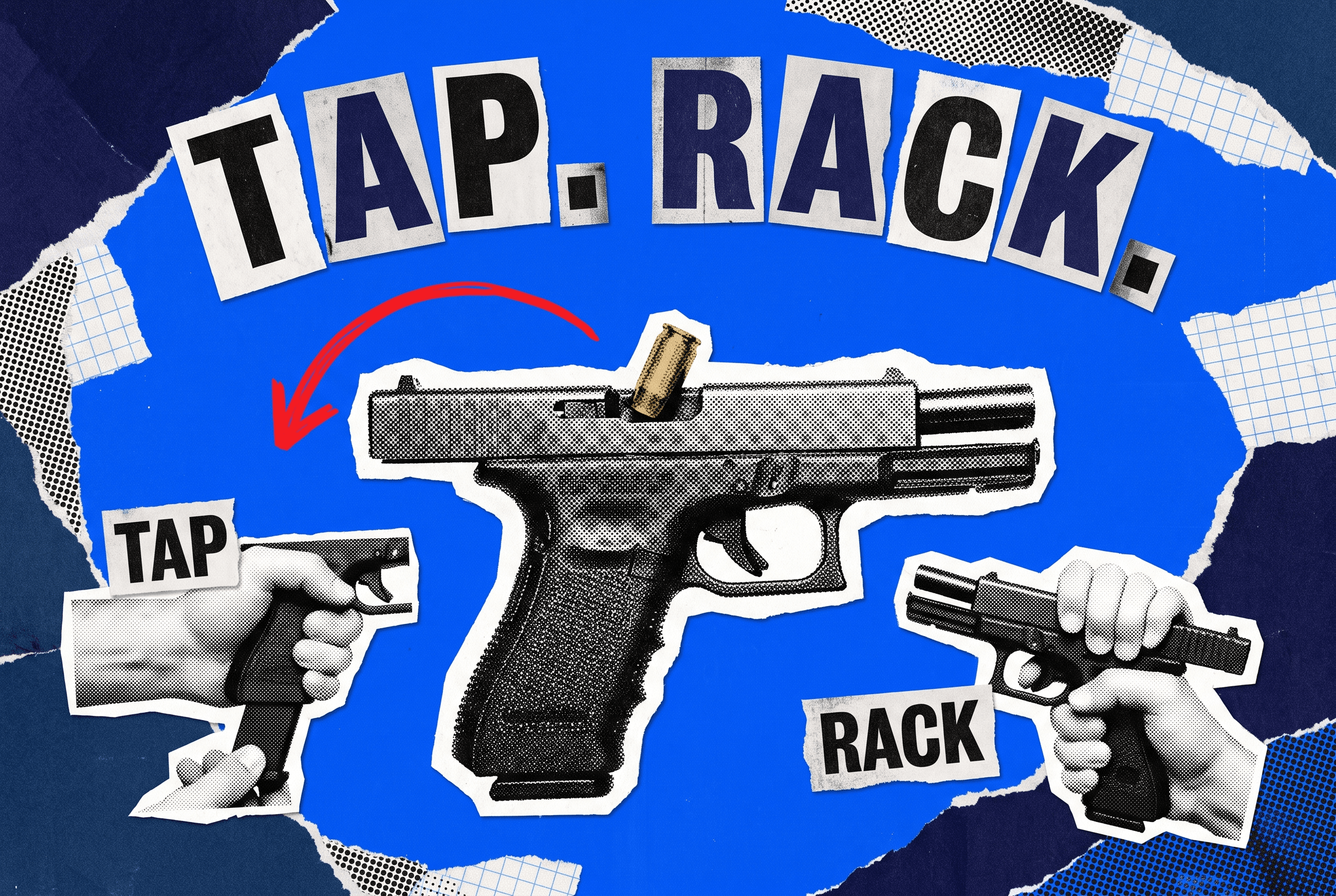
If your gun jams, stop, keep it pointed downrange with your finger off the trigger, and then look at what the slide is doing.
It went click instead of bang, or the slide is sitting half open with brass poking out of it, and you're standing at the bench not sure whether you're allowed to touch it. The first time it happens most people assume they've broken something, and almost nobody has.
Jams are ordinary. They happen to people who've been shooting for thirty years, and the cause is usually the magazine or the ammunition rather than the gun. If this is early in your shooting altogether, our guide to your first trip to the range covers the rest of what nobody explains.
Key takeaways
-
The first move is identical for every malfunction, so you don't need to identify it before you react.
-
Most jams trace back to the magazine or the ammunition, not a fault in the firearm.
-
The five common types are recognizable by sight: where the brass is, and what the slide is doing.
-
Seating the magazine and cycling the slide clears most of them. A double feed is the exception.
-
Malfunctions happen to experienced shooters too, regardless of how well a gun is maintained.
The short version
Every time: stop, muzzle stays pointed downrange, finger off the trigger, then look.
-
Nothing happened when you pulled the trigger: a misfire. Wait a moment before you do anything else.
-
Brass standing upright in the ejection port: a stovepipe. Seat the magazine, cycle the slide.
-
Slide didn't close, no round chambered: a failure to feed. Seat the magazine, cycle the slide.
-
Slide stuck part-open with two rounds tangled: a double feed. Magazine out first; cycling alone won't fix it.
-
Spent casing stuck in the chamber: a failure to eject. Seat the magazine, cycle the slide.
What should you do the moment a gun jams?
Stop, keep the muzzle pointed downrange, take your finger off the trigger, and look at the gun before you touch anything. That's the entire first response, and it's the same one whether the problem turns out to be a misfire or a double feed.
The instinct people have to fight is turning the gun toward themselves to get a better look at it. It's a completely natural thing to want to do when something mechanical isn't behaving, and it's the one thing to avoid. Keep it pointing where it was already pointing and lean over instead.
Then take your time. Nothing about a malfunction is improved by hurrying, and nobody at a range will think anything of it. You have as long as you want.
The Same First Move
Every malfunction starts with the identical three seconds, which is why you don't need to identify it before you react. This is worth internalizing because it removes the hesitation that makes a first jam feel alarming: you're not standing there deciding what to do, you're doing the same thing you'd do for any of them.
Stop. Muzzle downrange. Finger off the trigger. Look. Only then does it matter which malfunction you have, and by that point you're looking directly at the evidence that tells you.
Most guides teach a different response for each type, which quietly assumes you can name the malfunction before you deal with it. You usually can't, and you don't need to. Diagnosis comes after the first move, not before it.
What you are actually looking at
The five common malfunctions each look different, and you can tell them apart by where the brass is and what the slide is doing. That's the useful way to sort them, because it matches what you can actually observe standing over the gun.
| What you see | What it is | What it usually means |
|---|---|---|
| You pulled the trigger and nothing happened | Failure to fire, or misfire | Commonly defective ammunition, sometimes a firing pin or hammer spring issue. Wait a moment before clearing it |
| Brass standing upright, trapped in the ejection port | Stovepipe | The spent casing didn't clear. Weak or inconsistent ammunition, a fouled extractor, or grip |
| Slide didn't close and there's no round chambered | Failure to feed | Magazine issues, ammunition, grip, or the extractor |
| Slide stuck partly open with a spent case and a live round jammed together | Double feed | Most often a faulty magazine or a weak magazine spring |
| Spent casing stuck in the chamber | Failure to eject | Weak ammunition, extractor problems, a dirty chamber, or a tired recoil spring |
Instructors number some of these, so you'll hear stovepipe called a type 2 and double feed a type 3. The names are more useful than the numbers. The classifications above follow SSP Firearms' breakdown of common handgun malfunctions.
Tap and rack, and when it is not enough
Seating the magazine and cycling the slide clears most malfunctions, and a double feed is the one that needs the magazine out first. Those two facts cover the large majority of what you'll encounter.
For a stovepipe, a failure to feed, or a failure to eject, the sequence is short: push up firmly on the base of the magazine to make sure it's fully seated, cycle the slide briskly, and look to confirm the gun is clear or properly loaded. People sometimes call this tap and rack. The firm magazine seating matters more than most first-time shooters expect, because a magazine that isn't quite home causes several of these on its own.
A double feed is different and cycling the slide will not resolve it, because there's already something in the chamber. Lock the slide back, remove the magazine, cycle the slide to clear the chamber, look to confirm it's actually clear, then reload with a fresh magazine. The order matters, and getting the magazine out first is the part people skip.
For a round that didn't fire, wait a moment with the gun still pointed downrange before you clear it. That brief pause is standard practice and costs you nothing.
Why did my gun jam?
Most malfunctions trace back to the magazine, the ammunition, or grip, rather than a fault in the firearm itself. Reading across the causes for all five types above, the magazine and the ammunition come up far more often than anything else, and magazine defects are named specifically as a common cause of double feeds.
Grip is the other frequent contributor, and it's the one nobody mentions to new shooters. A wrist that gives slightly under recoil, sometimes called limp-wristing, can stop the slide cycling fully. It isn't a competence issue and it's very common early on; it's a mechanical consequence of how the gun uses recoil to work, and it sorts itself out as grip firms up.
Ammunition quality genuinely matters too, and cheaper practice ammunition varies more than most people expect. Our guide to choosing the right ammo covers the differences. Fouling from an uncleaned chamber or extractor sits on the list as well, which is one of the practical arguments for a regular cleaning routine.
When should you stop and get help?
If the same malfunction repeats across fresh magazines and different ammunition, stop shooting and have someone qualified look at it. That's the honest threshold, and it's a genuinely different situation from a one-off jam.
The reason for changing magazines and ammunition first is that you're isolating the variable. One jam tells you nothing. The same jam with a different magazine and a different box of ammunition points at the firearm, and at that point it's a job for a gunsmith or the manufacturer rather than something to work around at the bench.
An instructor is also the fastest way to get comfortable with any of this, because watching someone clear a malfunction takes about four seconds and reading about it takes considerably longer. AGO's training access connects you with instructors near you, and if you're still putting the setup together, the Find My Gun Kit quiz handles that end.
Getting comfortable with a gun that stops
A jam stops being alarming once you've cleared a few, which is one of the better reasons to book range time with an instructor rather than working it out alone. The first one is unsettling. The fourth one is mildly annoying, which is the correct amount of concern.
Worth remembering as you build that comfort: malfunctions happen regardless of how well a gun is maintained, and experienced shooters encounter them too. A stoppage isn't a verdict on your gun or on you. It's an interrupted mechanical cycle with a handful of ordinary causes, most of which live in the magazine.
American Gun Owners exists so the learning curve isn't something you climb by yourself, from the kit that arrives matched to the instructor access that comes with it. If you'd rather start the whole thing with a setup chosen for you, the Find My Gun Kit quiz takes a couple of minutes. And if you haven't taken any formal instruction yet, our guide on taking a class covers that decision.
Frequently Asked Questions
Is a gun jam dangerous?
A malfunction is a mechanical stoppage, and it's handled routinely by keeping the muzzle pointed downrange and your finger off the trigger while you sort it out. The one situation warranting a little extra patience is a round that didn't fire, where waiting briefly before clearing is standard practice. Beyond that, it's a mechanical problem rather than an emergency.
Does a jam mean my gun is broken?
Usually not. Malfunctions can occur no matter how well maintained a handgun is, and the common causes are the magazine, the ammunition, or grip. A single jam tells you very little. A pattern that repeats across different magazines and different ammunition is the signal that something needs looking at.
What is a stovepipe?
It's when a spent casing fails to eject cleanly and ends up trapped upright in the ejection port, sticking out where the slide should be closing. The name comes from how it looks. It's one of the easier malfunctions to spot and it usually clears by seating the magazine firmly and cycling the slide.
Can bad ammo cause a jam?
Yes, and it's one of the most common causes. Weak or inconsistent ammunition appears as a cause of failures to eject, stovepipes, and misfires. If you're getting repeated malfunctions, swapping to a different box of ammunition is one of the quickest ways to narrow down what's happening.
How do I practice clearing malfunctions?
This is worth learning from an instructor rather than from a page, because the useful version involves handling a real firearm with someone watching your technique. Most instructors cover malfunction clearing as standard material in range sessions, and it's a reasonable thing to ask for specifically when you book.
Sources
- SSP Firearms, Common Handgun Malfunctions: sspfirearms.com
Related
-
First Time at the Range: Why Starting With American Gun Owners Sets You Up for Success
-
The Right Tool for the Job: Pistols, Revolvers, and Shotguns
We strive to provide accurate, up-to-date information to help first-time firearm owners make informed decisions. Because laws and regulations vary and may change, always verify the requirements that apply to your location and follow safe firearm handling practices.