A Woman's First Range Trip: What to Expect and What to Bring
By AGO
October 12, 2026
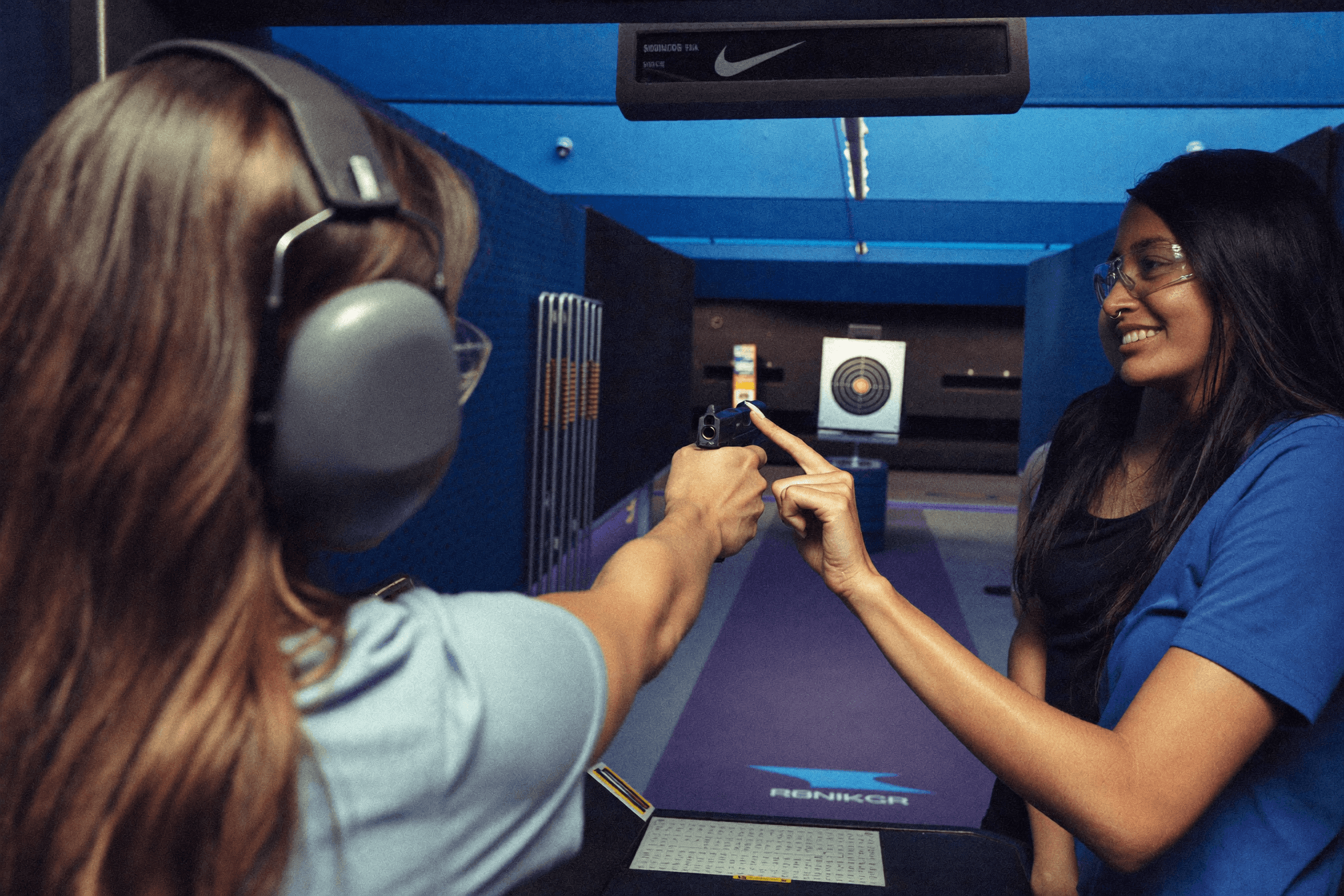
You're in the parking lot working out whether there's a routine you're supposed to already know, and whether everyone inside will be able to tell that you don't.
Here's the whole answer in advance. Wear closed-toe shoes and something that closes at the neck, tie your hair back, bring eye and ear protection if you own any, and tell the person at the counter it's your first time. That's it. Everything after that is their job.
American Gun Owners wrote this one for the woman actually going, which turns out to be an unusual thing to do. For the parts that apply to anyone's first visit, the check-in, the lane, the etiquette, our guide to a first trip to the range covers them properly. This page is the parts that are specific to you.
Key takeaways
-
Hot brass is the reason for a high neckline and closed-toe shoes, and it's the detail general guides give one line to.
-
Newcomers were 17 percent of adult shooting-sports participants in 2022, a 42 percent rise since 2020, and NSSF describes that group as increasingly represented by women.
-
Three things decide how the hour goes, and all three are settled before you arrive.
-
Loaner eye and ear protection is sized for a larger head, so bringing your own is the highest-value thing you can carry in.
-
Telling the counter it's your first visit changes the service you get at every range worth using.
The short version
| Closed-toe shoes, a high neckline, your own eye and ear protection if you have them, and one sentence at the counter saying it's your first time. The rest of the hour takes care of itself. |
|---|
What should a woman wear to a gun range?
Closed-toe shoes, a top that closes at the neck, and hair tied back, all for the same reason. A semi-automatic throws spent cases out to the side and slightly back, they come out hot, and they land wherever they land.
General guides mention closed-toe shoes and stop there. The case down the front of a scoop neck is the one that people remember, and it's the one nobody warns you about. A brass case at that temperature against skin is startling more than anything else, and startled is the least useful thing to be while holding a firearm. Dressing around it costs you nothing and removes the whole problem.
| What to wear | Why | How the general guides treat it |
|---|---|---|
| Closed-toe shoes | Brass lands on the floor around you and rolls underfoot. | Required by every range on this results page. |
| A top that closes at the neck | A case down the front of a scoop or V neck is the most common first-visit complaint there is. | One line about a collar, with no reason attached. |
| Hair tied back | Keeps it clear of the ear protection seal, and off your face on the lane. | Absent from every general guide we read. |
| A cap with a brim | Deflects anything coming back toward your face. | Sometimes mentioned, usually optional. |
| Fitted sleeves rather than loose | Loose fabric catches on the bench and on the firearm. | Rarely mentioned. |
None of this is a dress code and no range will turn you away for a V neck. It's the difference between an hour you enjoy and an hour you spend adjusting.
The Counter Script
Three sentences at the front desk get you set up properly, and saying them costs you nothing. They are: it's my first time, I'd like the lane briefing rather than assuming I know it, and is an instructor available for part of the hour.
The part people dread is not the shooting. It's the ninety seconds at the counter where you have to improvise a conversation while looking like you know what you're asking for. Having the three sentences ready removes that entirely, and it also gets you better treatment, because a range that knows you're new will slow down and walk you through things they'd otherwise assume.
Worth saying plainly: tell them at the desk that it's your first time, and every range worth using will change how they handle the next ten minutes. The ones that don't have told you something useful about where to book next time.
What to bring that the range probably will not have
Ranges rent eye and ear protection, and the loaner sets are built for a larger head than most women have. That's the single practical gap between what the range provides and what actually fits you, and it's worth planning around.
Ear protection that doesn't seal properly doesn't do its job. The National Institute on Deafness and Other Communication Disorders notes that hearing loss can come from a single exposure to an intense impulse sound, and that repeated exposure at or above 85 A-weighted decibels can cause it too, which is why protecting your hearing is the one piece of equipment worth owning before you own anything else. Muffs that sit properly on a smaller head, or plugs you can size yourself, solve it.
Worth knowing before you spend anything: this is one of the few pieces of range equipment where sizing is a real variable rather than a preference, and it is the reason the rental counter is the weakest link in an otherwise well-equipped building. A set of muffs you have fitted once at home is a different experience from a loaner you are adjusting on the lane.
Eye protection has the same problem in a milder form: loaner glasses tend to sit wide and slide. Everything else on a general packing list, the firearm, ammunition, targets, a case, is available to rent or buy at the counter, so there's nothing else you genuinely have to arrive holding.
Going alone, or bringing someone
Going alone is entirely normal, and bringing someone is a choice about company rather than a requirement. Ranges book individual lanes by the hour and nobody at the desk will ask who you're with.
It's worth knowing what the internet looks like on this question, because it shapes the advice you'll find. The community threads ranking for a woman's first range trip are titled things like how to help my girlfriend have a good first experience, and the best way to prepare my wife. That's our reading of the live results page in September 2026, and it means most of the guidance out there is addressed to the person bringing you rather than to you.
If you do bring someone, the useful version is someone who will let the range officer do the teaching. A partner who shoots and wants to instruct you is the most common reason a first visit goes badly, and an instructor booked for twenty minutes avoids it completely.
Is it normal to feel nervous the first time?
Nerves before a first visit are completely ordinary, and they usually fade somewhere inside the first magazine. Handling something unfamiliar in a room full of people who look practiced is a reasonable thing to feel self-conscious about, and it passes faster than you'd expect.
You are also in considerably more company than the room suggests. NSSF's 2024 participation survey found newcomers made up 17 percent of adult shooting-sports participants in 2022, a 42 percent rise since 2020, and describes that group as increasingly urban and increasingly represented by women. The ranges have noticed even if the internet hasn't caught up.
The practical antidote is the same as for anything new: know the first three minutes in advance. You check in, you get a lane and a briefing, you put your protection on before you go through the door. After that you're just doing the thing you came to do.
How do you find a range that suits a first visit?
Look for a range that runs instruction and women's sessions, because both are signals about how first visits get treated there. A range that teaches has staff used to explaining, and that's most of what you want on day one.
Women's sessions and ladies' nights are common and they're a genuinely easier room for a first visit, with everyone at a similar starting point. Our guide to women's classes covers what they include, and finding a group near you covers the regular ones.
The other signal is how the website talks about first visits. A range that publishes its own briefing, lists its instructors, or says anywhere that first-timers are welcome has already decided how it wants that hour to go. A range whose site is entirely about memberships and competition is telling you something too.
If you're weighing up owning something rather than renting, the Find My Gun Kit quiz matches you to a complete setup legal where you live, protection included, which removes the fitting problem above.
Your first hour, and what comes after
An hour is plenty for a first visit, and what you decide afterwards is a separate question you don't have to answer that day. Plenty of people go once, enjoy it, and think about it for a month before going again.
If you want the fastest version of getting comfortable, book an instructor for part of that first hour. Twenty minutes of someone correcting your grip in real time is worth more than a season of reading, and AGO's training access connects you with instructors near you. Go, shoot a box of ammunition, and let the rest be a decision for another week.
Frequently Asked Questions
What does it feel like to shoot a gun for the first time?
Louder than people expect, and less dramatic than the movies suggest. The recoil on a common first-time rental in a mild chambering is a firm push rather than anything violent, and most people find the noise is the part that takes adjusting to, which is what the ear protection is for. The first shot is the startling one. By the fifth it's a skill you're practicing, and most people are surprised how quickly that shift happens.
Do you have to bring your own gun to a range?
No. Ranges rent firearms by the hour, and most keep a selection aimed at first-time shooters specifically. Renting is the usual way to do a first visit, and it's also the cheapest way to try several before you decide whether to buy anything. You'll need photo identification, and some ranges ask that renters arrive with someone or take a short briefing first.
What is a good first gun for a woman?
Fit matters more than the model, and the honest answer depends on your hand rather than on your gender. For a first range visit you don't need to have decided anything, because renting settles the question faster than reading will.
Can you go to a range without booking ahead?
Often yes, though lanes fill in the evenings and at weekends. Calling ahead is worth the two minutes, partly to check lane availability and partly because it's an easy first conversation to have before you arrive. Ranges that run classes will also tell you when the quieter hours are, which is useful on a first visit.
How long does a first range visit usually take?
Budget about an hour and a half in total: check-in and briefing, then the lane time itself, which is usually booked in hour blocks. Most first-time shooters find a box of ammunition is plenty and stop before the hour is up. There's no expectation that you use the full time.
Sources
-
National Shooting Sports Foundation, NSSF's Firearm Ownership & Sports Shooting Participation Survey Reveals American Firearm Use, nssf.org, published January 16, 2024
-
National Institute on Deafness and Other Communication Disorders, Noise-Induced Hearing Loss, nidcd.nih.gov, last updated April 16, 2025
Related
We strive to provide accurate, up-to-date information to help first-time firearm owners make informed decisions. Because laws and regulations vary and may change, always verify the requirements that apply to your location and and handle every firearm with care.