Gun Safety Rules Every First-Time Owner Should Know
By AGO
October 12, 2026
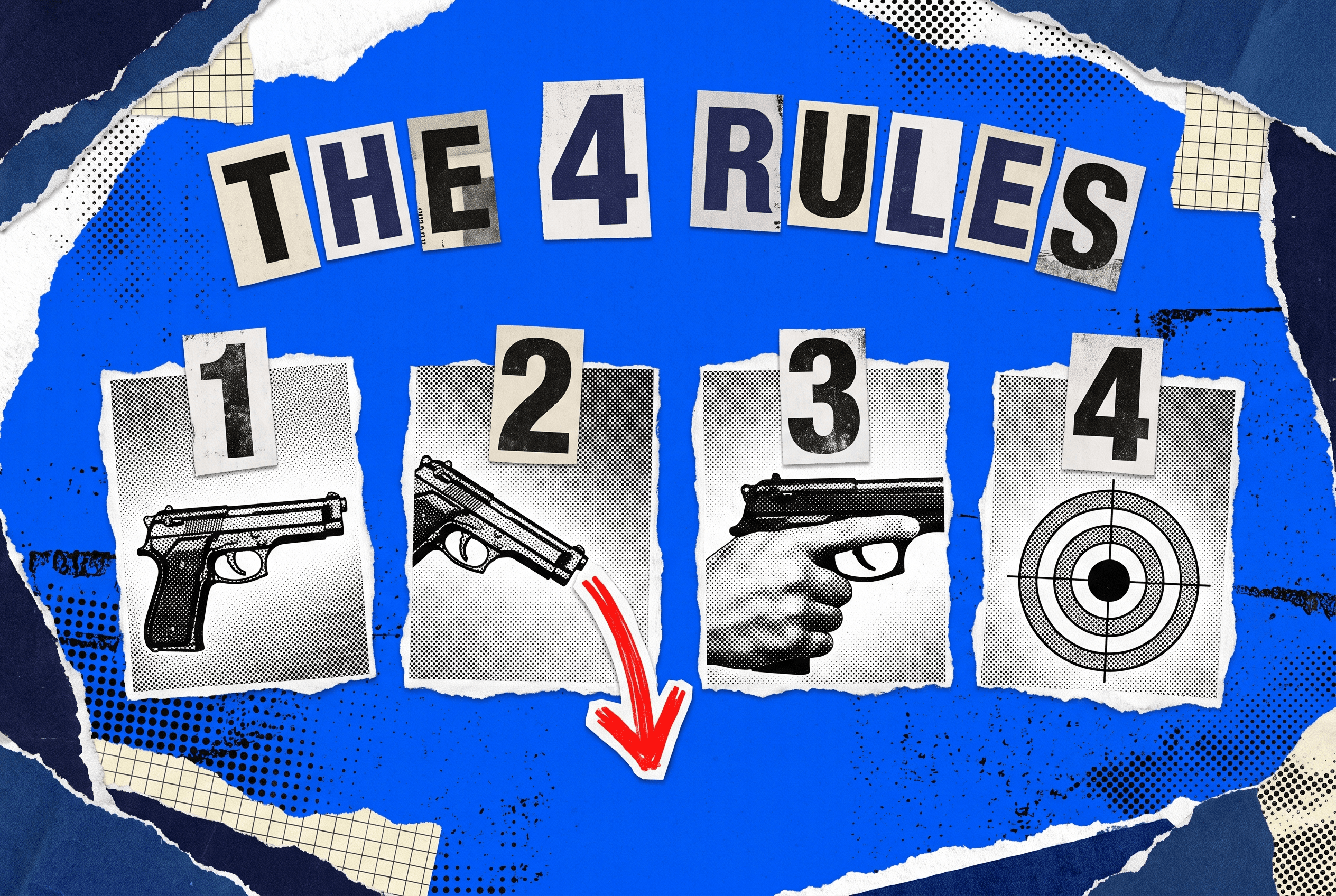
Four rules are what almost every instructor teaches, and the published sets around them run from three to ten. One trade association publishes both a four-rule set and a ten-rule set, and the two do not contain the same rules.
Four tabs open, four different numbers, and a growing suspicion that you're missing something. It's a reasonable suspicion to have, because nobody on the first page of results mentions that their list overlaps almost entirely with the one next to it.
American Gun Owners went through the published sets and counted. If you're weighing up formal instruction as well, our guide to taking a class before you buy covers that decision. This page is the rules themselves, in language you can picture.
Key takeaways
-
Published rule sets from named organizations run from three rules to ten.
-
NSSF publishes a four-rule set and a separate ten-rule set, and the ten-rule set leaves out the trigger-finger rule its own four-rule article carries.
-
Two rules are numbered in every set we checked: control where the muzzle points, and be sure of your target and what lies beyond it.
-
The four-rule core adds treating every gun as loaded and keeping your finger off the trigger, and it is what the four-rule and six-rule sets share entirely.
-
Past those four, the sets add practical detail rather than argue, so a longer list is a longer list and not a different doctrine.
The short version
| Learn four things: treat every gun as loaded, point the muzzle where a shot would do no damage, keep your finger off the trigger until you mean to fire, and know your target and what is beyond it. Every longer list you meet adds practical detail on top of those four. |
|---|
How many gun rules are there, actually?
Published sets run from three rules to ten, and the spread is about how much practical detail each organization chooses to number. The shortest sets cover handling. The longest fold in storage, maintenance, and what to do when someone hands you a firearm.
Start with one organization, because it makes the point on its own. NSSF publishes four primary rules in one article and a separate ten rules of safe gun handling page elsewhere on the same site. California's Department of Justice publishes six basic rules. Other sets on the same results page run to three and to nine, which we counted live in September 2026 and have not cited, because they sit outside the source pool we publish from.
That gives you a way to read any set you meet. Check whether it contains the four-rule core: treat as loaded, muzzle direction, trigger finger, target and beyond. If all four are there, you are looking at a familiar set with a different amount of detail numbered after it. If one of them is not numbered, as happens in the ten-rule set, read the wording of the rules around it before you assume it is absent.
Here is the part none of those pages mentions. Line the sets against each other and only two rules are numbered in every one: point the muzzle where a shot would do no damage, and be sure of your target and what lies beyond it. The four-rule core that most instructors teach adds treating every gun as loaded and keeping your finger off the trigger, and the four-rule and six-rule sets number all four. The ten-rule set does not drop those two. It puts them inside the wording of its third rule, the one about not relying on the mechanical safety, which says to treat every gun as though it can fire at any time and never to touch the trigger until you actually intend to shoot.
The Four-Rule Core
Four actions make up the core that almost every instructor teaches, and learning those four is most of what the rules ask of you. Treat every gun as loaded. Point the muzzle where a shot would do no damage. Keep your finger off the trigger until you mean to fire. Know your target and what lies beyond it.
All four appear in the NSSF four-rule set and in California's six, in slightly different words. Two of them, the muzzle and the target, are numbered in every set we checked including the ten-rule one. The other two are numbered in the shorter sets and written into the body of a rule in the longer one, which is worth knowing rather than worrying about.
There is a reason these sit at the front and not, say, storage. Each one governs the gun while it is in motion, and each is a decision you make in the moment with no time to look anything up. The rules that come later govern situations where you can stop and think.
If you want one sentence to carry out of this page: published lists run from three rules to ten and even one organization publishes two different sets, so learn the four-rule core and treat everything else as detail.
What does each rule actually mean?
Each rule describes one specific habit, and the plain version is easier to picture than the formal wording. Below are the six from California's set, which is the longest of the two we're citing, restated in the words you'd actually use.
| The rule, in plain English | What it asks of you in practice |
|---|---|
| Treat every gun as loaded | Check the chamber yourself every time a gun changes hands or comes out of storage, including when someone has just told you it's empty. |
| Point the muzzle where a shot would do no damage | California's page spells out what it means by this: a direction where an accidental discharge would not cause injury or damage. At a range that's downrange. At home it's a wall with nothing behind it that matters, or the floor. |
| Finger off the trigger until you mean to fire | Rest your finger along the frame, outside the trigger guard. This is the one that feels least natural at first and becomes automatic fastest. |
| Know your target and what lies beyond it | A bullet that misses, or passes through, keeps going. Check what's behind before you check your sights. |
| Know how your own gun works | Loading, unloading, and clearing a stoppage on the specific model you own. The manual and an instructor cover this faster than any article can. |
| Store it locked, with ammunition separate | California states the purpose plainly, to prevent unauthorized use. Project ChildSafe lists four device types for this: a gun safe, a lock box, a case, or a lock. |
Storage is the rule that reaches furthest past the moment you're holding a gun, and it has its own guide. Our walkthrough of storing a gun at home covers the device choices and where they go. The four device types above come from Project ChildSafe.
Why does the count keep changing?
Different organizations number different amounts of practical detail, so the count reflects an editorial choice more than a disagreement about substance. A trade association writing for the whole market numbers four. A state agency writing for people applying for a firearm certificate numbers six.
The clearest evidence that this is an editorial choice sits inside one organization. NSSF's four-rule article and its ten-rule page are both current, and the ten-rule version replaces the trigger-finger rule with points about ammunition, obstructions, modification and protection at the range. That is our reading of the two pages side by side, not a statement either page makes about the other.
Longer sets tend to add the same kinds of things: handing a firearm to another person, checking a barrel is clear before loading, using the correct ammunition, what to do when a round does not fire, storage, and maintenance. All of it useful, none of it in tension with the core four.
The rules overlap on purpose
The rules are built to overlap, so that one lapse on its own is not enough to cause harm. Read the core four together and you will notice they each independently prevent the same outcome, which is a design choice rather than repetition.
Treating a gun as loaded means you behave correctly even when you are wrong about the chamber. Pointing the muzzle where a shot would do no damage means that if the gun does fire unexpectedly, the round goes somewhere harmless. Keeping your finger off the trigger makes it far less likely to fire at all. Knowing what is beyond the target covers the shot you meant to take. Any one failing on its own is survivable, and the set is written so they would have to fail together.
That overlap is our reading of how the rule texts are worded, not a doctrine either source states outright. It is worth knowing because it explains why nobody drops a rule for being repetitive, and why the shortest published set is still three and not one.
Which rules apply at home, not just at the range?
Four of the six govern what you do while a gun is in your hands, and the other two sit outside the moment of firing. Those two, knowing how your own gun works and storing it locked with ammunition separate, are the ones that apply on the days you don't shoot at all.
The handling rules still apply at home, and they apply hardest during the ordinary moments: unpacking a new purchase, cleaning, moving a gun between rooms, showing it to someone who asked. Those are the times a gun is in your hands without a range officer nearby, and they're worth treating exactly like the firing line. Our guide to the first steps after buying sequences the first few weeks.
If you're still assembling the setup around the gun, the Find My Gun Kit quiz matches you to a complete one for where you live, storage and protection included.
Getting these to feel automatic
These stop being a list you recite and start being how you hold a gun, and that switch happens faster with someone watching than it does from reading. An instructor will correct a trigger finger in two seconds that a page can only describe.
Give it one range session with someone qualified beside you and the core four stop requiring thought. AGO's training access connects you with instructors near you, and most of them cover exactly this in the opening minutes. A first session at a range is also where the habits get tested under mild pressure, which is the point at which they stick. Our guide to a first range trip covers what that hour looks like.
Frequently Asked Questions
What are the 4 cardinal rules of gun safety?
The four-rule version published by NSSF is: keep the firearm pointed in a direction where a shot would do no damage, treat all guns as though they are loaded, keep your finger off the trigger until you are ready to shoot, and be sure of your target and what is beyond it. Other organizations order them differently, and the substance is the same across all of them.
What is the #1 rule of gun safety?
It depends which set you read, which is why the question has no single answer. NSSF leads both of its sets with pointing the firearm in a direction where a shot would do no damage, and California's Department of Justice leads with treating all guns as if they are loaded. Muzzle direction and knowing your target are the two that carry a number in every set we checked, which is the closest thing to an answer.
What are the 10 basic gun safety rules?
NSSF publishes a ten-rule version covering muzzle direction, keeping firearms unloaded when not in use, not relying on the gun's mechanical safety catch, being sure of your target and what is beyond it, correct ammunition, handling a round that does not fire, eye and ear protection, checking the barrel is clear, leaving the gun unmodified and serviced, and learning how your own firearm works. Trigger discipline and treating every gun as loaded are not numbered separately in that list. Both sit inside the third rule, on not relying on the mechanical safety. It is a different list from the same organization's four-rule article, not an expansion of it.
Do the rules change at a range compared with at home?
The handling rules are identical in both places, and the difference is that a range has a range officer and a backstop built in while your home does not. The two rules about knowing your own gun and storing it locked carry more weight at home, because that is where a gun spends most of its life. The other difference is social: at a range everyone around you is following the same habits, and at home you are the one setting them.
How do you practice the rules without live ammunition?
Most instructors cover this in a first session, and it is worth learning with someone watching your hands. The short answer is that the habits are practiced with the gun confirmed empty, ammunition in another room, and the muzzle pointed somewhere a shot would do no damage. The specifics belong to your own model and your instructor, which is why this page does not walk through them. Booking one session for this alone is a reasonable thing to do, and most instructors expect the question.
Sources
-
National Shooting Sports Foundation, 4 Primary Rules of Firearm Safety, nssf.org, published July 5, 2021
-
National Shooting Sports Foundation, Firearm Safety - 10 Rules of Safe Gun Handling, nssf.org
-
State of California, Department of Justice, Office of the Attorney General, Firearm Safety, oag.ca.gov
-
Project ChildSafe, Securing Your Firearm, projectchildsafe.org
Related
We strive to provide accurate, up-to-date information to help first-time firearm owners make informed decisions. Because laws and regulations vary and may change, always verify the requirements that apply to your location and and handle every firearm with care.