How Long Does a Gun Background Check Take? The NICS Timeline
By AGO
October 2, 2026
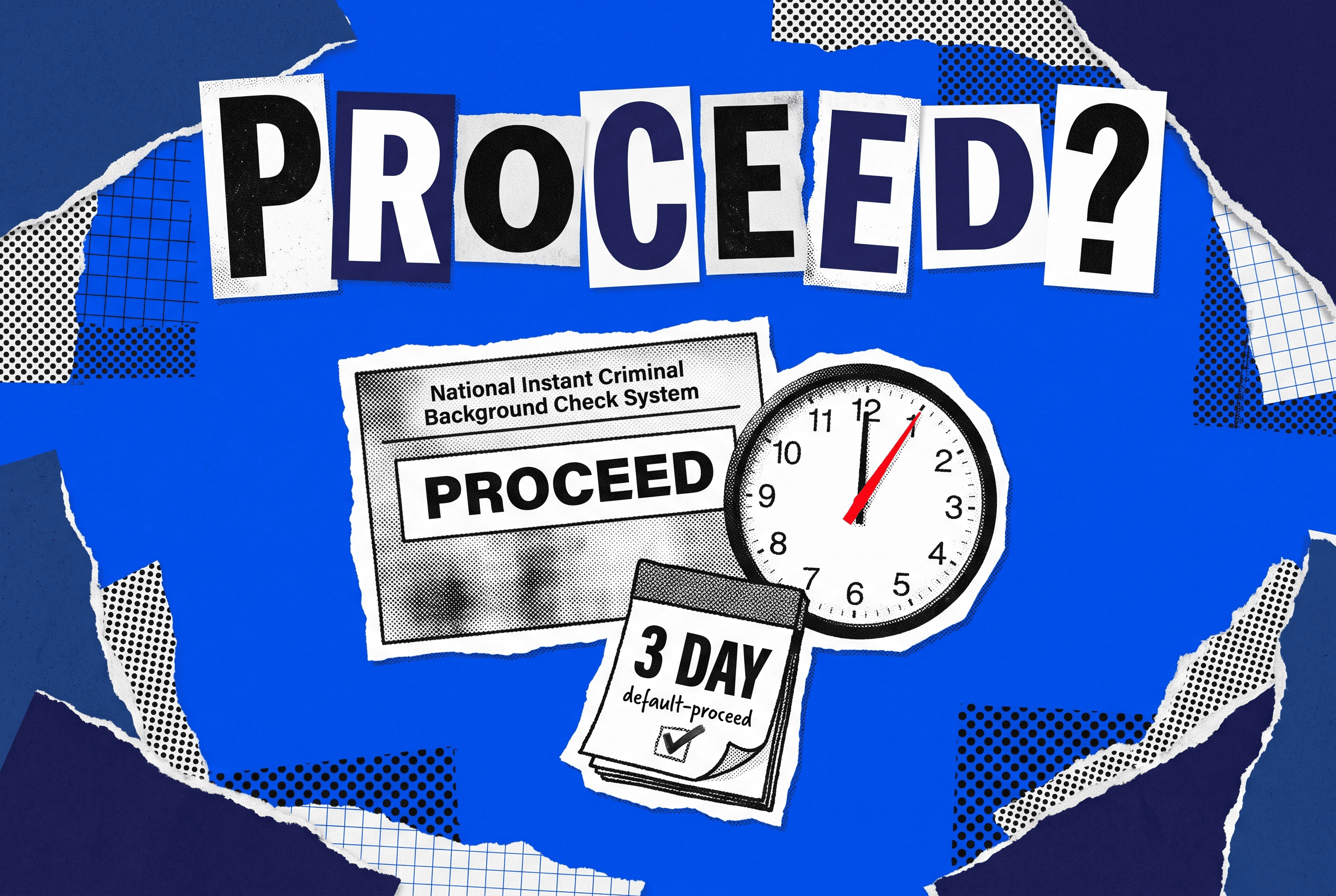
Most gun background checks come back in minutes, and if yours is delayed, federal law sets a three-business-day clock before a dealer may proceed.
The "few minutes" answer is the one everybody gives, and it's true right up until it isn't. If you're reading this at a counter because the answer didn't come back, that's the version nobody explains properly. A delay is the system asking for more time, and it happens to people with nothing whatsoever on their record.
Here's the actual timeline, taken from the statute rather than paraphrased. If you're not sure whether a check applies to your purchase at all, our guide to whether you need a background check covers that first.
Key takeaways
-
A check returns one of three results: Proceed, Delayed, or Denied.
-
Most return a decision while you're standing there, usually within minutes.
-
A delay is not a denial. It means the system needs more time to review something.
-
The federal clock is three business days, which the statute defines as days state offices are open.
-
Buyers under 21 can face a ten-business-day clock if the system flags a juvenile record to investigate.
The short version
-
Proceed: the system issues a unique identification number and the transfer can complete. Usually minutes.
-
Delayed: no result yet. After three business days with no response, federal law permits the dealer to proceed.
-
Denied: the transfer doesn't go ahead. Correction processes exist through federal and state channels.
Where this comes from. The timeline below is quoted from 18 U.S.C. section 922(t) as published by Cornell Law School's Legal Information Institute, read on September 1, 2026. This page explains how the mechanism works. It doesn't assess any individual check, and it takes no position on the policy behind the three-day provision.
How long does a gun background check take?
Most background checks return a decision within minutes at the counter, and the ones that don't fall under a three-business-day federal clock. The check happens after you complete Form 4473, while you wait, and for the large majority of buyers it's the shortest part of the whole purchase.
The dealer contacts the system, the system responds, and one of three things comes back. There's no application to submit and nothing you do yourself; the licensee runs it and tells you the result. Our walkthrough of ATF Form 4473 covers the paperwork that immediately precedes it.
What varies isn't really the speed of the system. It's whether your name and details resolve cleanly against the records it searches.
The three outcomes
A NICS check returns one of three results: Proceed, Delayed, or Denied, and each one starts a different process. The statute attaches a specific consequence to each, which is worth seeing laid out.
| Outcome | What the system did | What happens next |
|---|---|---|
| Proceed | The system provided the licensee with a unique identification number | The transfer can complete, usually within minutes at the counter |
| Delayed | The check isn't resolved and no number has been issued | Under section 922(t)(1)(B)(ii), once three business days pass with no notification that the transfer would violate federal, state, local or Tribal law, the dealer may proceed |
| Denied | The system notified the licensee that receipt would violate federal, state, local or Tribal law | The transfer doesn't proceed. Federal and state correction processes exist for contesting a result |
Only one of those three is a finding about you. The other two are the system either answering quickly or not answering yet.
What "delayed" actually means
A delay means the system needs more time to review something, and it isn't a finding that anything is wrong. The most common reasons have nothing to do with the buyer's own record: a common name, a shared date of birth, an incomplete record in a database somewhere.
The statute treats a delay as an absence of an answer rather than as a negative answer, which is why the three-day provision exists at all. Section 922(t)(1)(B)(ii) is written around the system having "not notified the licensee" that the transfer would be unlawful. It's a timeout, not a verdict.
Practically, that means a delayed check often resolves on its own within a day or two, and you'll hear from the dealer when it does.
What is a business day, exactly?
Federal law defines a business day for this purpose as a day on which state offices are open, which excludes weekends and state holidays. The statute says it directly: "3 business days (meaning a day on which State offices are open)."
That parenthetical is the detail almost every summary drops, and it's the one that answers the question people actually have. Work through a Friday afternoon delay:
-
Friday: the check is delayed. The clock hasn't started counting business days yet.
-
Saturday and Sunday: state offices are closed, so neither day counts.
-
Monday, Tuesday, Wednesday: the three business days.
So a Friday delay generally puts you at Wednesday, not Monday. Add a state holiday anywhere in that window and it moves again. This is why two people delayed on the same day in different states can wait different amounts of time.
If you are under 21, the clock can be longer
For buyers under 21, the system may flag cause to investigate a juvenile record, which extends the clock to ten business days. This comes from section 922(t)(1)(C), and it's comparatively recent law that consumer-facing pages rarely mention.
The ordinary three-business-day clock still applies to most under-21 buyers. The longer window applies specifically where the system "notifies the licensee that cause exists to further investigate a possibly disqualifying juvenile record." In that case, the statute gives ten business days rather than three before the same default-proceed provision applies.
Ten business days, under the same definition, means two full working weeks, longer if a holiday falls inside it. If you're under 21 and buying, plan for the possibility rather than being surprised by it. Our guide to age requirements, federal versus state covers the rest of what applies at your age.
Can a dealer still refuse after three days?
Yes. The statute permits a transfer after three business days; it doesn't require one, and many dealers wait for a definite answer as a matter of policy. That's their call to make, and it's worth knowing before you plan around the three-day mark.
Reading the provision closely, it removes a legal barrier rather than creating an obligation. A licensee who prefers to wait for an explicit Proceed is entitled to do that, and plenty do. If that's a dealer's policy, it's usually stated up front if you ask.
Our guide to what an FFL dealer is covers how the transfer relationship works. And if you'd rather have the dealer step arranged for you rather than sourced yourself, the Find My Gun Kit quiz starts that process. Our guide to buying a gun online walks through the full online sequence.
Planning around a check you cannot predict
Bring valid photo identification, allow more than a lunch break, and treat a delay as a scheduling problem rather than a verdict. The statute requires the dealer to verify your identity from "a valid identification document ... containing a photograph," so the ID is not optional and a current one saves the most common avoidable holdup.
Beyond that, the honest answer is that you can't predict which result you'll get, and neither can the dealer. Most people are done in minutes. Some aren't, for reasons that usually have nothing to do with them, and the clock that follows is defined precisely enough that you can plan around it once you know how it counts.
American Gun Owners is built to take the guesswork out of the surrounding steps, from the kit itself to arranging the transfer with a licensed dealer near you. The check is the one part nobody controls, and everything around it can be sorted in advance. If you're at the start of that, the Find My Gun Kit quiz takes a couple of minutes.
Frequently Asked Questions
Why was my background check delayed?
Dealers aren't told the reason, so nobody at the counter can tell you. Delays commonly involve records that need a closer look rather than anything about the buyer specifically, including shared names and dates of birth or incomplete records in a database. The system resolving a delay in your favor is a routine outcome.
Does a delay mean I will be denied?
No. A delay and a denial are different results with different statutory consequences. A delay means the system hasn't returned an answer, which is why federal law provides for the transfer to proceed after three business days if no answer arrives. Many delayed checks resolve as a Proceed.
Can I leave and come back?
Usually yes, and that's the normal arrangement for a delay. The dealer holds the firearm and contacts you when the check resolves or when the three business days have elapsed, depending on their policy. Ask what their practice is, since dealers differ on whether they proceed at the three-day mark.
What if the check is never resolved?
That's the situation the three-business-day provision addresses. If the system hasn't notified the dealer that the transfer would be unlawful once the three business days have passed, federal law permits the dealer to proceed. Whether they do is their decision, and some wait indefinitely for a definite answer.
Does the check take longer for an online purchase?
The check itself is the same and happens the same way, because an online purchase still transfers through a licensed dealer who runs it in person. What's different is the shipping time to that dealer beforehand.
Sources
- 18 U.S.C. section 922(t), Cornell Law School Legal Information Institute: law.cornell.edu
Related
-
Do You Need a Background Check to Buy a Gun? The Honest Answer
-
How Old Do You Have to Be to Buy a Handgun? Federal vs State
We strive to provide accurate, up-to-date information to help first-time firearm owners make informed decisions. Because laws and regulations vary and may change, always verify the requirements that apply to your location and follow safe firearm handling practices.