How to Pick Your First Concealed Carry Holster
By AGO
August 10, 2026
Last updated: August 15, 2026
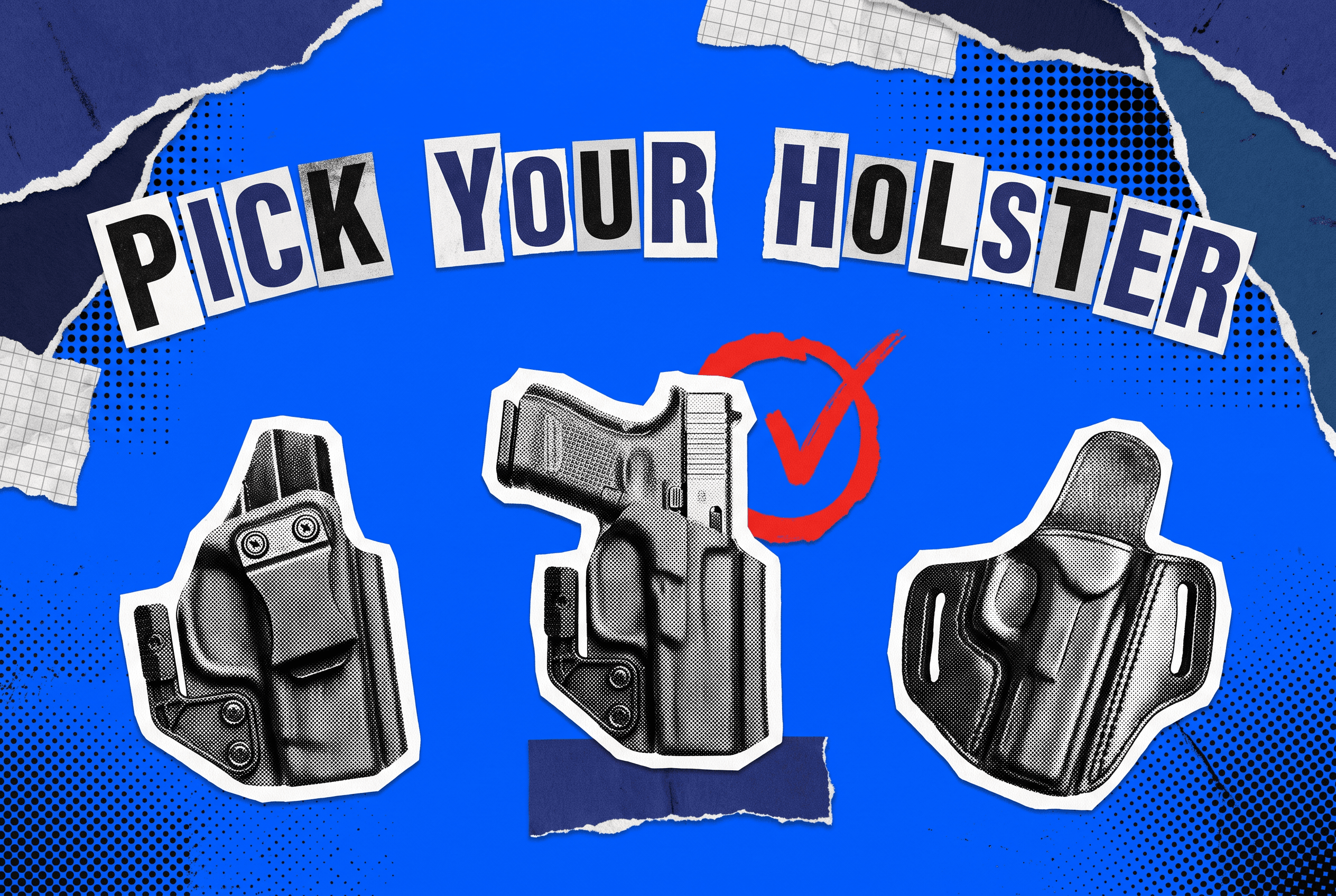
The best first concealed carry holster is an inside-the-waistband holster in Kydex or a hybrid, worn strong-side around the 3 to 4 o'clock position with a sturdy gun belt. It hides well, holds the gun securely, and works for most bodies and everyday clothing.
Holster shopping is where a lot of new carriers stall, because there are dozens of types and everyone online swears theirs is the only right one. It is simpler than it looks once you know what each type is for.
Once you know the main types and what each does, the choice comes down to your body, your clothing, and how you want to carry. Our guide to open, concealed, and constitutional carry covers the legal side, and this one covers the holster itself.
Key takeaways
- The most recommended first holster is an inside-the-waistband (IWB) holster in Kydex or a hybrid, worn strong-side at 3 to 4 o'clock.
- Holster type is really about position: IWB and appendix conceal best, OWB is most comfortable, and off-body suits clothing with no waistband.
- Material matters: Kydex holds its shape for clean one-handed reholstering, leather is comfortable but softer, and hybrids split the difference.
- A sturdy gun belt matters as much as the holster, since a flimsy belt lets the whole setup sag and shift all day.
- New to carrying? American Gun Owners can match a holster and setup to your gun and body, so you skip the buy-it-twice mistake.
What is the best holster for concealed carry?
The best holster for concealed carry for most new carriers is an IWB holster in Kydex or a hybrid, worn at the strong-side hip. It conceals a gun under an untucked shirt, keeps the trigger fully covered, and lets you reholster with one hand. This proven setup is where most instructors tell a new carrier to start before experimenting with other positions.
Concealed carry has become common and the basic setup is well established, so a first holster is a well-charted decision rather than new territory. Gun ownership has broadened too, with about 25% of women and 40% of men personally owning a gun, per Pew Research. A holster that covers the trigger and holds the gun securely is the foundation that makes carrying confident and comfortable.
The main concealed carry holster types
Concealed carry holsters are grouped by where they carry the gun on your body, and each position trades concealment against comfort and draw speed. The table below is the whole map on one screen. Most new carriers start with IWB and branch out only once they know how they will actually dress and move.
| Holster type | Carries where | Best for | Trade-off |
|---|---|---|---|
| IWB (inside waistband) | Inside the pants at the hip, 3 to 5 o'clock | Everyday concealed carry under a normal shirt | Deep concealment, slower draw, often needs pants a size up |
| Appendix (AIWB) | Front of the body, 12 to 2 o'clock | Fast draw and access while seated | Fast and concealable, less comfortable seated, needs discipline |
| OWB (outside waistband) | On the belt, outside the pants | Range practice, larger guns, cooler weather | Most comfortable and fastest draw, hardest to conceal |
| A pocket holster in a front pocket | Small subcompact or backup guns | Very discreet, slow draw, tiny guns only | |
| Belly band | Elastic band around the torso | Leggings, activewear, no gun belt | Flexible placement, less consistent draw |
| Off-body (bag) | A dedicated locking compartment in a bag | Dresses and outfits with no waistband | Easiest to start, slowest access, bag must stay with you |
| Ankle | Strapped above the ankle | Backup gun or seated professions | Well concealed, slow and awkward to draw |
Notice that concealment and draw speed usually pull against each other. IWB and appendix hide well but draw a little slower, while OWB draws fast but needs a cover garment. Your clothing and daily routine decide which trade-off is right for you.
Which holster is best for a first-time carrier?
The best holster for a first-time carrier is a strong-side IWB holster, because it balances concealment, comfort, and a smooth, repeatable draw. Worn at 3 to 4 o'clock, it hides under everyday clothes and keeps the gun in a consistent spot you can reach naturally. It is forgiving of grip length and works across most body types with a proper belt.
Appendix carry is popular and fast, though it rewards practice and disciplined trigger-finger habits, so many new carriers grow into it. The smart move is to master one position first. If you are still choosing a gun to build the setup around, our guide to finding a handgun that fits pairs naturally with holster selection.
IWB or OWB: which should you start with?
Start with IWB for daily concealed carry and add an OWB holster for the range, since the two solve different problems. IWB tucks the gun inside your waistband for concealment under a shirt, which is what most people need for carrying in public. OWB rides outside the belt for comfort and a fast draw, which makes it ideal for practice and for carrying larger guns.
Many carriers eventually own both, one for carry and one for the range. If you are on a single-holster budget, choose IWB, because a concealment holster is the harder problem to solve well. You can always add an OWB rig later as your practice routine grows. Finding training near you is the fastest way to learn which position suits you.
What holster material should you choose?
Holster materials come down to Kydex, leather, and hybrid, and Kydex is the surest default for a first holster. The material decides how the holster holds its shape, how it feels against your body, and whether you can reholster with one hand. The table below compares the three so you can match one to your priorities.
| Material | Pros | Cons | Best for |
|---|---|---|---|
| Kydex (rigid polymer) | Holds its shape, one-handed reholster, sweat resistant, consistent retention | Can feel harder against the body | Set-and-forget reliability for a first holster |
| Leather | Molds to your body, comfortable classic feel | Softens over time and can collapse, making one-handed reholstering unreliable | OWB carry, dry climates, traditional preference |
| Hybrid (soft backer plus Kydex shell) | Kydex retention with a softer feel against the skin | The backer softens and can loosen over years | Comfortable IWB carry for first-timers |
For a first holster, Kydex or a hybrid is the surer pick, because a holster that keeps its shape lets you reholster without pointing the muzzle at your hand. Whatever you choose, make sure it fully covers the trigger guard. That single feature is non-negotiable for confident carry.
Holsters for women and different clothing
Women often need a wider range of holster options, because dresses, leggings, and fitted clothing give a waistband holster little to anchor to. When there is no sturdy belt, a belly band, a corset or bra holster, or a dedicated off-body carry bag can carry the gun securely. Each keeps the trigger covered while working with clothing a standard IWB holster cannot.
Fit still comes first, and the same grip and comfort checks apply. Women make up a large and growing share of new carriers, at nearly three-quarters of first-time gun buyers sampled from 2021 to 2024, per NSSF. Our woman's guide to buying a first firearm covers how clothing and body shape shape the whole setup.
How to make sure your holster fits and carries well
A holster fits and carries well when it fully covers the trigger, holds the gun through normal movement, and rides on a belt stiff enough to support it. Retention is the term for how securely the holster keeps the gun, and for concealed carry a snug friction fit is usually enough. Add a proper gun belt, because a flimsy belt is the most common reason a good holster feels bad.
One more thing worth knowing is that most quality holsters let you adjust the ride height and the cant, which is the angle the gun sits at. A small tweak here often fixes printing or a draw that feels awkward, so do not give up on a holster after a single wear. Give a new setup a week of everyday use before you judge it, since your body and the holster both need a short break-in period to settle in and start feeling natural.
Test the setup at home before you carry in public. With an unloaded gun, holster it, then sit, stand, reach, and bend in front of a mirror to check that it stays put and stays hidden. This simple rehearsal shows you whether the position and belt work for your body, and a little practice up front builds real confidence.
Frequently Asked Questions
Do you legally need a holster to concealed carry?
Most states do not legally require a holster to carry concealed, but carrying without one is risky and often unwise. A holster covers the trigger and keeps the gun secure, which prevents accidents. Some ranges and instructors require a holster, and carrying a loose gun in a pocket or waistband is discouraged for good reason.
Is a Kydex or leather holster better?
Kydex is generally the better first holster because it holds its shape and allows clean one-handed reholstering, while leather is more comfortable but softens over time. Hybrids combine a Kydex shell with a soft backer for a middle ground. For reliable everyday carry, Kydex or a hybrid is the common recommendation.
Can you conceal carry without a gun belt?
You can, but a proper gun belt makes concealed carry far more comfortable and secure. A stiff belt supports the holster so the gun does not sag or shift. If you carry without a belt, such as with leggings, a belly band spreads the weight around your torso instead of relying on a waistband.
Is appendix carry a sound way to carry concealed?
Appendix carry works well when you use a quality rigid holster and practice careful trigger-finger discipline. Because the muzzle points toward the body while holstering, a Kydex holster that fully covers the trigger and a slow, deliberate reholster are what keep it reliable. Many carriers start with strong-side hip carry and move to appendix once comfortable.
How should you care for a holster?
Care for a holster by keeping it clean and dry and checking the retention and screws now and then. Wipe out grit that could scratch the gun or wear the holster, and confirm the trigger stays fully covered. Kydex needs little upkeep, while leather benefits from occasional conditioning and should be checked for softening at the mouth.
Carry with confidence
Picking your first concealed carry holster gets easy once you start with an IWB Kydex or hybrid at the strong-side hip, then adjust to your body and clothing. Add a good gun belt, make sure the trigger is covered, and test the setup at home before you carry. Do that, and carrying feels natural instead of fussy. Most carriers end up with a small collection over time, one holster for daily carry and another for the range, and that is a normal, practical way to cover every situation you run into. When you want the whole setup matched for you, the Find My Gun Kit quiz is here.
Sources
National Shooting Sports Foundation, First-Time Gun Buyers Industry Research Report
Pew Research Center, Key Facts About Americans and Guns (2024)
Related
Open Carry, Concealed Carry, and Constitutional Carry
The Best Handgun for Women: How to Find One That Fits
A Woman's Guide to Buying Her First Firearm
What You Actually Need to Buy Your First Gun: A Checklist
Requirements for buying, owning, and storing a firearm vary by state and can change, so confirm what applies where you live.