The Best Concealed Carry Guns for First-Time Carriers
By AGO
September 18, 2026
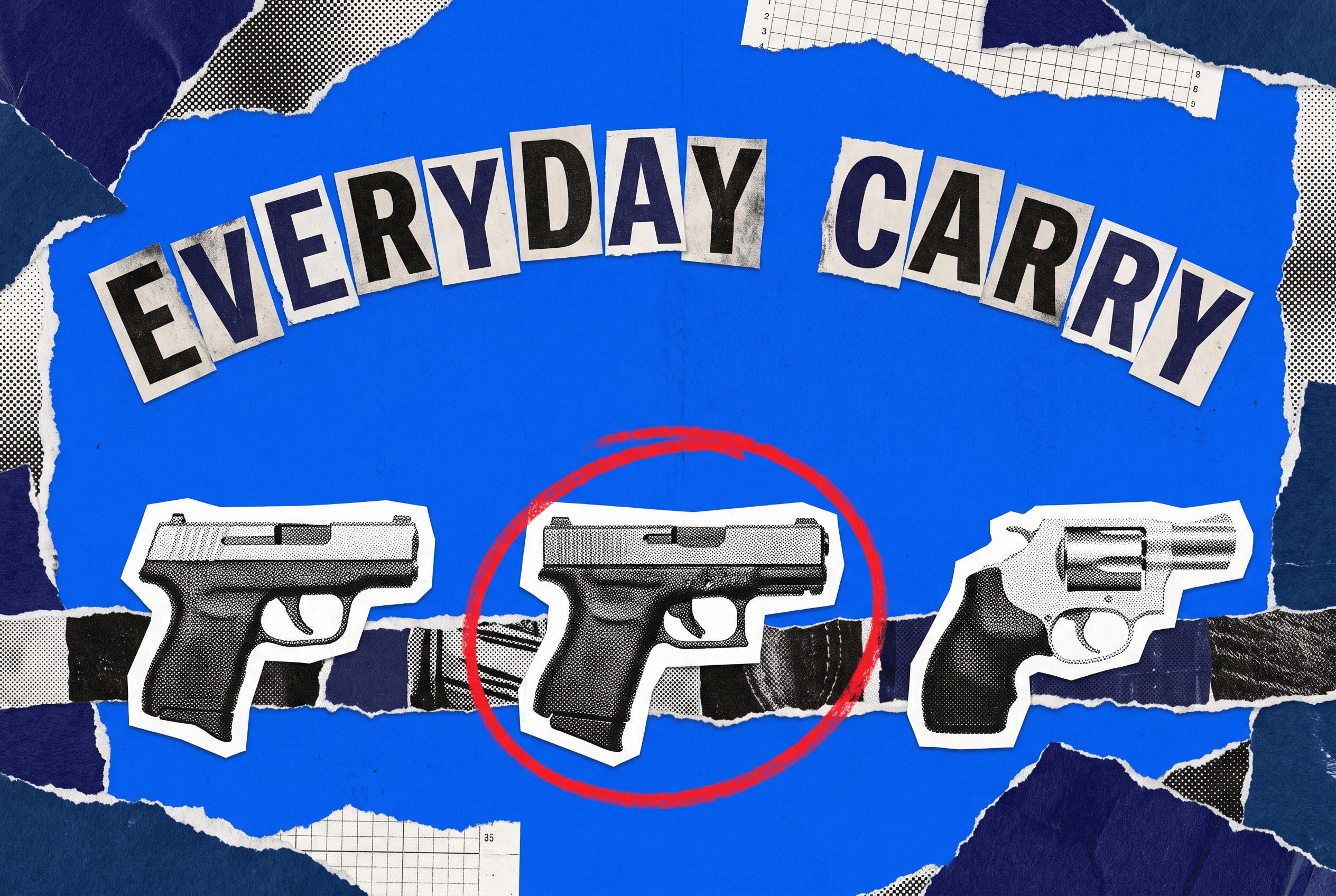
The best concealed carry gun for a first-time carrier is a slim 9mm around 20 ounces that you'll still be wearing at the end of the day.
That last part is the whole thing. A pistol that feels reasonable across a shop counter is a different object at hour nine of a workday, and the gun that ends up in a drawer because it dug into your ribs is doing nothing for you. Roundups rank fourteen pistols by overall quality, which is a fair question and not the one you're asking.
Your question is narrower: how much shootability are you willing to trade for something that disappears under a t-shirt? Once you can see that tradeoff clearly, the shortlist gets short fast. If you're choosing a first handgun generally rather than a carry gun specifically, our guide to the best first handgun answers the opposite question and reaches different conclusions on purpose.
Key takeaways
-
The first carry gun decision is a tradeoff between concealment and shootability, not a ranking.
-
Most first carry guns land between 20 and 23 ounces, with a barrel around 3.1 to 3.7 inches.
-
Going lighter has a cost: the 10.6-ounce Ruger LCP Max conceals nearly anywhere and is harder to shoot well.
-
Capacity varies more than size does, from 10+1 to 15+1 across pistols of broadly similar dimensions.
-
Holster availability is a real selection criterion, and it favors the models that have been out longest.
The short version
-
Best all-day balance: SIG P365 or S&W Shield Plus. Around 20 to 22 ounces, 3.1-inch barrel, the size most people settle on.
-
Best for deeper concealment or a smaller frame: Ruger LCP Max, at 10.6 ounces. You give up caliber and ease of shooting.
-
Best capacity without much extra size: Springfield Hellcat Pro OSP, 15+1 at 20.7 ounces.
-
Best budget tier: Taurus GX4 XL, 20 ounces with 11+1 or 13+1.
-
Best if you'd rather carry a revolver: Ruger LCR, 14.4 ounces, lowest recoil, lowest capacity.
How we put this together. American Gun Owners has not test-fired these pistols, and we're not going to pretend otherwise. Every specification below is a published figure from Outdoor Life's tested-and-reviewed concealed carry guide, checked on September 1, 2026, and attributed where it appears. What we've added is the framing: which of those numbers actually matter when you've never carried before.
What makes a good first concealed carry gun?
A good first carry gun is slim, around 20 ounces, chambered in 9mm, and common enough that holsters are easy to find. Those four things matter more than anything on a spec sheet, and the last one catches people out. A pistol with three holster options is a pistol you'll end up carrying badly.
Notice what isn't on that list. Not the best trigger, not the tightest groups, not the highest capacity. Those are the criteria that decide a good range gun, which is a genuinely different decision, and our guide to picking a first handgun you'll actually shoot works through that one. A carry gun is judged on whether it's still on your hip at 6pm.
That's why the two guides land in different places. A bigger pistol shoots better and is worse to carry, and both statements are true at the same time.
The Carry Tax
Every ounce and inch you remove to make a pistol disappear gets paid for in recoil, sight radius, and how well you shoot it. We call that the Carry Tax, and it's the single most useful idea for a first-time carrier, because it turns a confusing ranking into one decision you make deliberately.
The tax is visible in the published numbers. At one end, Outdoor Life lists the Ruger LCP Max at 10.6 ounces with a 2.8-inch barrel in .380 ACP, which conceals almost anywhere and gives you the least to hold onto. At the other, the Springfield Hellcat Pro OSP runs 20.7 ounces with a 3.7-inch barrel and 15+1, which shoots considerably better and asks more of your waistband.
Neither is the right answer. The right answer is the point on that line you'll actually live with, and most first-time carriers land in the middle, around 20 to 22 ounces. Pick your point on purpose rather than by whichever gun a roundup put first.
First carry pistols compared
The pistols first-time carriers actually choose between sit within about three ounces and half an inch of each other, and they differ most in capacity. Seeing them side by side is usually the moment the decision stops feeling overwhelming. All figures below are from Outdoor Life, verified September 2026.
| Pistol | Capacity | Barrel | Weight | Where it sits on the Carry Tax |
|---|---|---|---|---|
| SIG Sauer P365 | 10+1 | 3.1 in | 22 oz | The benchmark, labeled ultra concealable by Outdoor Life |
| Smith & Wesson Shield Plus | 10+1 or 13+1 | 3.1 in | 20 oz | Lightest of the mainstream subcompacts, with a capacity option |
| Glock 43X | 10+1 | 3.41 in | 23.1 oz | Slightly heavier, widest holster availability of the group |
| Springfield Hellcat Pro OSP | 15+1 | 3.7 in | 20.7 oz | Most capacity for the weight, prints more |
| Taurus GX4 XL | 11+1 or 13+1 | 3.71 in | 20 oz | Budget tier, with capacity that competes above it |
| Ruger LCP Max (.380 ACP) | 10+1 or 12+1 | 2.8 in | 10.6 oz | The far end. Conceals anywhere, hardest of these to shoot well |
| Ruger LCR (.22 LR) | 8 | 1.87 in | 14.4 oz | Revolver option, lowest recoil, lowest capacity |
Read down the weight column and the Carry Tax is right there. The Hellcat Pro carries five more rounds than the P365 at less weight, and costs you in length and printing. The LCP Max weighs less than half of anything else and asks the most of your shooting.
How much gun can you actually conceal?
Concealment is set by your body and your clothing at least as much as by the pistol, which is why the same gun disappears on one person and prints badly on another. This is the part spec sheets can't tell you, and it's why borrowing conclusions from someone built differently rarely works.
Torso length, waistband height, and what you wear day to day all move the answer. Someone in a loose button-down has options that someone in fitted athletic wear doesn't, and the same pistol behaves differently at appendix than it does behind the hip. Our guide to how concealed carry changes what handgun fits a woman goes deeper on body-type fit.
The practical test is boring and effective: wear it around the house, unloaded, for a full day before you decide. Sitting, driving, and reaching for something on a high shelf will tell you more than any review.
Why 9mm is the default first choice
9mm is the default because it balances manageable recoil, wide ammunition availability, and capacity in a small frame better than the alternatives. Nearly every pistol in the table above is chambered for it, and that's not an accident of fashion.
The two exceptions show why. Outdoor Life lists the LCP Max in .380 ACP and the LCR in .22 LR, both chosen for lighter recoil and smaller packaging, and both giving something up to get there. Going smaller than 9mm buys concealment and comfort; staying at 9mm buys you a round that's cheap enough to practice with constantly, which matters more for a first-time carrier than most spec comparisons admit.
If the caliber numbering still feels arbitrary, our explainer on gun calibers untangles it.
What should you try before you buy?
Rent two or three at a range and carry an unloaded pistol in a holster around the house before you commit. Both steps cost you an afternoon and they're the difference between choosing well and choosing from a table.
Rental counters exist for exactly this, and most ranges stock the common carry models. Fire twenty rounds through a P365 and twenty through a Shield Plus back to back and you'll have an opinion that no review can give you. Then handle the carry question separately, because a gun that shoots beautifully can still be one you stop wearing by Wednesday.
Budget for the holster in the same decision rather than afterward. Our guide to picking your first concealed carry holster covers that half. And if you'd rather have the whole setup arrive matched instead of assembling it piece by piece, the Find My Gun Kit quiz sizes one to you.
Choosing the one you will actually wear
Pick the point on the Carry Tax you can live with every day, because the gun you actually wear is the one that does you any good. For most first-time carriers that's a slim 9mm around 20 ounces, and the specific badge on the slide matters far less than the shortlist suggests.
If you want a shortcut: start with the P365 or the Shield Plus, rent both, and only look further if something about them doesn't suit you. Drop to the LCP Max if your clothing genuinely can't hide a subcompact, or step to the Hellcat Pro if you want the capacity and can carry the extra length.
American Gun Owners exists so this isn't a solo research project. Kits arrive matched, with the firearm, both ammunition types, a case, and training access that connects you with an instructor near you, which is the piece that turns a carry gun into a skill. When you're ready to see what fits you, the Find My Gun Kit quiz takes a couple of minutes.
Frequently Asked Questions
Is a revolver a good first carry gun?
It can be, and it depends on what you value. Revolvers are mechanically simpler with fewer manipulations to learn, which some first-time carriers prefer. The tradeoff is capacity: Outdoor Life lists the Ruger LCR at 8 rounds of .22 LR against 10 or more for the subcompact pistols. Simplicity for capacity is a reasonable trade if you make it knowingly.
Do I need an optic on a carry pistol?
No, and most first-time carriers are better served spending that attention on practice. Several carry pistols now ship optic-ready, including the Hellcat Pro OSP and the Taurus GX4 XL T.O.R.O., so you can add one later without changing guns. Learn the irons first; the option stays open.
Is .380 enough for concealed carry?
Plenty of people carry .380, and the reason is packaging rather than performance. It allows pistols like the 10.6-ounce Ruger LCP Max that conceal where a 9mm won't. The tradeoff runs both ways: lighter guns are harder to shoot well, and shooting well matters. If a 9mm conceals under your clothing, most carriers stay with 9mm.
How heavy is too heavy to carry all day?
There's no single number, though the pattern in the specs is clear enough. The pistols marketed to daily carriers cluster between 20 and 23 ounces, and above that most people start leaving the gun at home on ordinary days. Weight also depends on your belt and holster, since a good gun belt makes a heavier pistol feel considerably lighter.
Should my carry gun be the same as my home defense gun?
They don't have to match, and there's a real argument for one gun rather than two while you're learning. A single pistol means one manual of arms, one holster, and all your practice compounding in one place. Many owners later add a larger home-defense firearm once the carry gun feels automatic.
Sources
- Outdoor Life, The Best Concealed Carry Guns for 2026, Tested and Reviewed: outdoorlife.com
Related
We strive to provide accurate, up-to-date information to help first-time firearm owners make informed decisions. Because laws and regulations vary and may change, always verify the requirements that apply to your location and follow safe firearm handling practices.