Transporting Your Firearm: Car, Plane, and Moving States
By AGO
October 28, 2025
Last updated: September 23, 2026
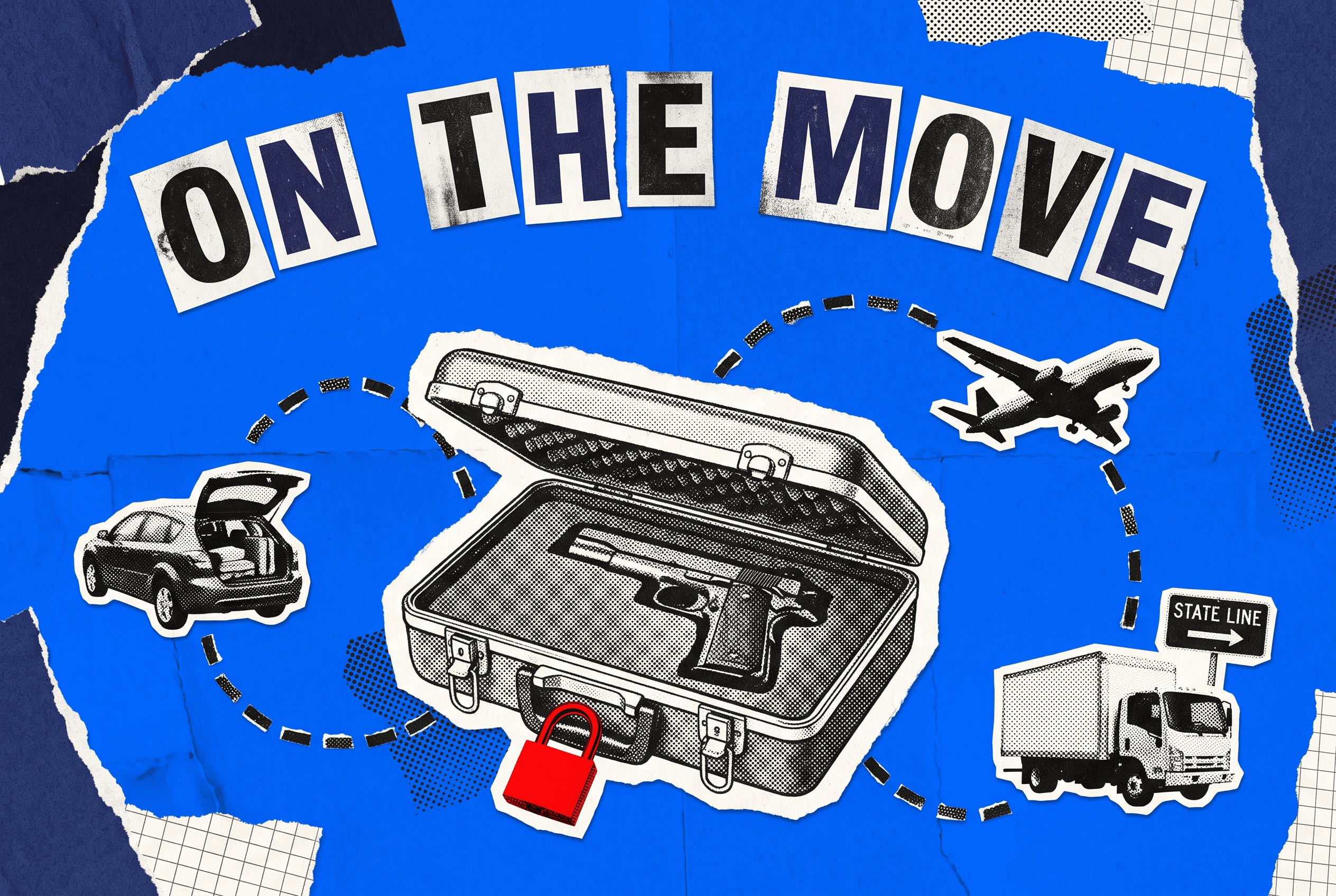
Unloaded, locked in a container, and not readily accessible is the packing standard that works almost everywhere. It comes from your own state's law plus one narrow federal provision for crossing state lines, not from a general federal rule, and knowing which is which is most of what makes this topic confusing.
You're driving somewhere on Saturday, or flying next month, and you'd rather sort this out now than wonder about it halfway down the interstate. It's a reasonable instinct, and the answer is more specific than most sources make it sound.
Federal law is narrower here than it looks. Section 926A covers transport between states, TSA covers flying, and your own state governs a drive that stays inside it. Here's what each of those actually requires, quoted from the source. American Gun Owners arranges the transfer through a licensed dealer at purchase, and the drive afterwards is what this page covers. If you're not sure which layer of law governs your question generally, our guide to which gun laws apply to you sorts that out first.
Key takeaways
-
There is no general federal rule for transporting a firearm. Section 926A covers interstate trips only.
-
Section 926A protects a trip between two places where you may lawfully possess and carry, when its conditions are met.
-
Those conditions are unloaded, not readily accessible, and where the vehicle has no separate compartment, a locked container that is not the glove box or console.
-
A drive that stays inside one state is governed by that state, and those rules vary.
-
Flying means a locked hard-sided case as checked baggage only, declared at the counter, and only you keep the key.
The short version
-
In the car: your own state governs a drive that stays inside it, and section 926A covers one that crosses a line. Either way, unloaded, locked, and not readily accessible, and not the glove box or console.
-
On a plane: unloaded, locked hard-sided case, checked baggage only, declared each time.
-
Moving states: check the destination's rules before you go, and an FFL can handle the transfer if you'd rather not carry it yourself.
Where this comes from. The federal transport provisions below are quoted from 18 U.S.C. section 926A via Cornell Law School's Legal Information Institute, and the air-travel rules from TSA's own guidance. Both read on September 1, 2026. This page reports what those sources say; state rules sit on top and are yours to confirm.
How should you transport a firearm?
Unloaded, in a locked container, and not readily accessible from the passenger compartment. That combination is the practical default everywhere, and it is also the wording section 926A uses for the one situation federal law does govern, which is crossing a state line: the firearm must be "unloaded, and neither the firearm nor any ammunition being transported is readily accessible." Inside your own state the governing rule is your state's, and this configuration is simply the one least likely to be wrong while you find out what that is.
The phrase doing the work is "readily accessible". It's not about whether the firearm is hidden, and it's not about whether you have a permit. It's about whether you could reach it from where you're sitting. That single idea explains most of the specific rules that follow.
One distinction underpins everything on this page: transporting is not carrying. Transport means a secured firearm in motion. Carrying means a firearm on your person, and it's governed by a different set of rules entirely. Conflating the two is why transport advice so often seems to contradict itself.
On the road
When driving, the conservative default is unloaded, stored in a locked case, with ammunition in a separate container. That combination meets section 926A's conditions when a trip crosses a state line, and it is the version least likely to run into a state's own rules on a drive that doesn't. It's the default worth using unless you've confirmed your state allows otherwise.
Here's the detail almost nobody publishes. Section 926A says that in a vehicle without a separate compartment from the driver's area, the firearm "shall be contained in a locked container other than the glove compartment or console." The two places people most instinctively reach for are the two the statute names as excluded. A locked case in the trunk, or in the rear cargo area of a vehicle without one, is the straightforward reading.
State rules vary on top of this. Some states don't require that level of separation, and if you hold a valid carry permit or you're in a constitutional carry state you may be able to keep a firearm accessible in the vehicle. Crossing a state line can change that immediately, which is the next section's problem. Our guide to storing a gun at home covers the container question more generally.
What happens if you get pulled over?
Some states require you to tell an officer you're carrying, and others don't, so the answer depends entirely on where you are. That category has a name, duty to inform, and whether it applies to you is a question about your state rather than about firearms generally.
This is a legal question with a state-specific answer, so a general article can tell you the category exists and not much more. What's worth doing is knowing your state's position before you drive, not working it out in the moment, and knowing it for every state on a longer route.
The practical, non-legal part is preparation. Keep your license, registration and any permit somewhere you can reach without reaching toward where the firearm is stored, which is a matter of not creating an awkward moment rather than a legal requirement. If you're traveling somewhere unfamiliar, confirm the duty-to-inform position for each state you'll pass through, and confirm it from that state's own source.
Flying with your firearm
Flying is the most standardized context on this page, because one federal agency sets the rules and publishes them plainly. TSA states it directly: "You may transport unloaded firearms in a locked hard-sided container as checked baggage only."
| Requirement | What it means in practice | Source |
|---|---|---|
| Unloaded, locked, hard-sided case | Soft cases don't qualify. The case goes in checked baggage and never in the cabin | TSA |
| Declare at the counter | "Declare each firearm each time you present it for transport as checked baggage" | TSA |
| You keep the key | "Only the passenger should retain the key or combination to the lock", unless TSA asks for it to inspect | TSA |
| Ammunition packed properly | In checked baggage, in packaging designed to carry it, and not loose | TSA |
| "Loaded" is broader than you'd think | Under 49 CFR 1540.5 a firearm counts as loaded when a round is chambered or in an inserted magazine, and TSA also treats it as loaded when firearm and ammunition are both accessible to you | TSA / 49 CFR 1540.5 |
That last row is the one that catches people, and it's worth reading twice. Having an unloaded firearm in one bag and ammunition in your pocket can be treated the same way as a loaded firearm for enforcement purposes. Keeping both properly packed in checked baggage avoids the whole question.
Arrive earlier than you normally would, because the declaration adds a step and staff may need to inspect the case before your bag is cleared.
Crossing state lines
Section 926A is the provision people mean when they talk about protected interstate transit, and it allows transport between two places where you may lawfully possess and carry the firearm, provided the transport conditions are met. Both halves of that condition matter, and "possess" alone is not what the statute says. It's the reason a lawful owner can drive through a state with stricter rules.
Read it as a defense with conditions, not a blanket exemption. The firearm stays unloaded and not readily accessible for the whole journey, with the locked-container requirement applying where the vehicle has no separate compartment. Meeting those conditions is what the provision turns on, and it does not lift the rules of the states you pass through.
The practical version: check every state on the route, not only where you're starting and finishing, and keep the firearm packed the same way the whole way. Our explainer on open carry, concealed carry, and constitutional carry covers the carry side, which is the part that changes most between states.
Do the rules change if you are moving?
Yes, because a move makes your destination's rules permanent for you rather than temporary. Registration requirements, magazine capacity limits, and restrictions on particular models all vary, and something entirely ordinary where you live now may not be where you're going.
Look up the destination state's rules before the move, not after, since the useful time to know is while you still have options. Transport itself follows the same section 926A conditions as any other interstate drive.
If you'd rather not move firearms yourself, you can ship through a Federal Firearms Licensee, often a local gun store or range, at the destination. They handle the transfer properly and it removes the question from your moving day entirely. Our guide to what an FFL dealer is covers how that works.
Planning the drive before you load the car
Pack it the same way every time and the question stops coming up. Unloaded, in a locked case, ammunition separate, in the trunk. That configuration meets section 926A's conditions for a trip that crosses a state line, and it's the conservative choice for one that doesn't, so you're not re-deciding at every state line.
The three things worth doing before a longer trip: check every state on the route, know the duty-to-inform position for each, and confirm anything unusual from that state's own source rather than a forum. That's twenty minutes of preparation for a journey you'd otherwise spend wondering about.
American Gun Owners handles the location question at the point of purchase, showing what's available where you are and arranging the transfer through a licensed dealer near you. If you're still choosing the firearm, the Find My Gun Kit quiz starts from your zip code. And if the trip is to a range, our guide to a first range visit covers what happens when you arrive.
Frequently Asked Questions
Can you keep a gun in your glove compartment?
It depends on your state, and federal law only answers it for a trip that crosses a state line. On those, section 926A requires a locked container "other than the glove compartment or console" where the vehicle has no separate compartment from the driver's area, so the statute names both explicitly. That condition attaches to protected interstate transport, not to every drive. Several states do allow a firearm in the glove box, some only with a permit, so your own state's rule is the one that governs a local trip.
Do you have to tell an officer you have a gun in the car?
That depends on your state. Some impose a duty to inform during an encounter and others don't, and the requirement can differ for permit holders. Because it varies this much, it's worth confirming for your own state, and for each state on a longer route, before you drive rather than in the moment.
Can you fly with ammunition?
Yes, in checked baggage and packed properly. TSA requires ammunition to be in packaging designed to carry it, not loose, and it travels checked, not in the cabin. Note that TSA treats a firearm as loaded when the firearm and ammunition are both accessible to you, so keeping both properly packed matters for more than tidiness.
Does a concealed carry permit change how you transport?
It can, within the state that issued it and in states that recognize it. A permit may allow a firearm to be accessible in a vehicle where it otherwise wouldn't be. What a permit doesn't do is travel automatically, so its effect changes at state lines and reciprocity is worth checking before a trip.
Can you ship a firearm to yourself?
The reliable route is shipping through a Federal Firearms Licensee at the destination, who handles the transfer properly on arrival. It's the standard approach for a move, and it takes the question off your moving day. Your local dealer can usually arrange it from the sending end.
Sources
-
18 U.S.C. section 926A, interstate transportation of firearms, Cornell Law School Legal Information Institute: law.cornell.edu
-
Transportation Security Administration, Transporting Firearms and Ammunition: tsa.gov
Related
We strive to provide accurate, up-to-date information to help first-time firearm owners make informed decisions. Because laws and regulations vary and may change, always verify the requirements that apply to your location and follow safe firearm handling practices.