What Happens in a Concealed Carry Class?
By AGO
September 22, 2026
Last updated: September 23, 2026
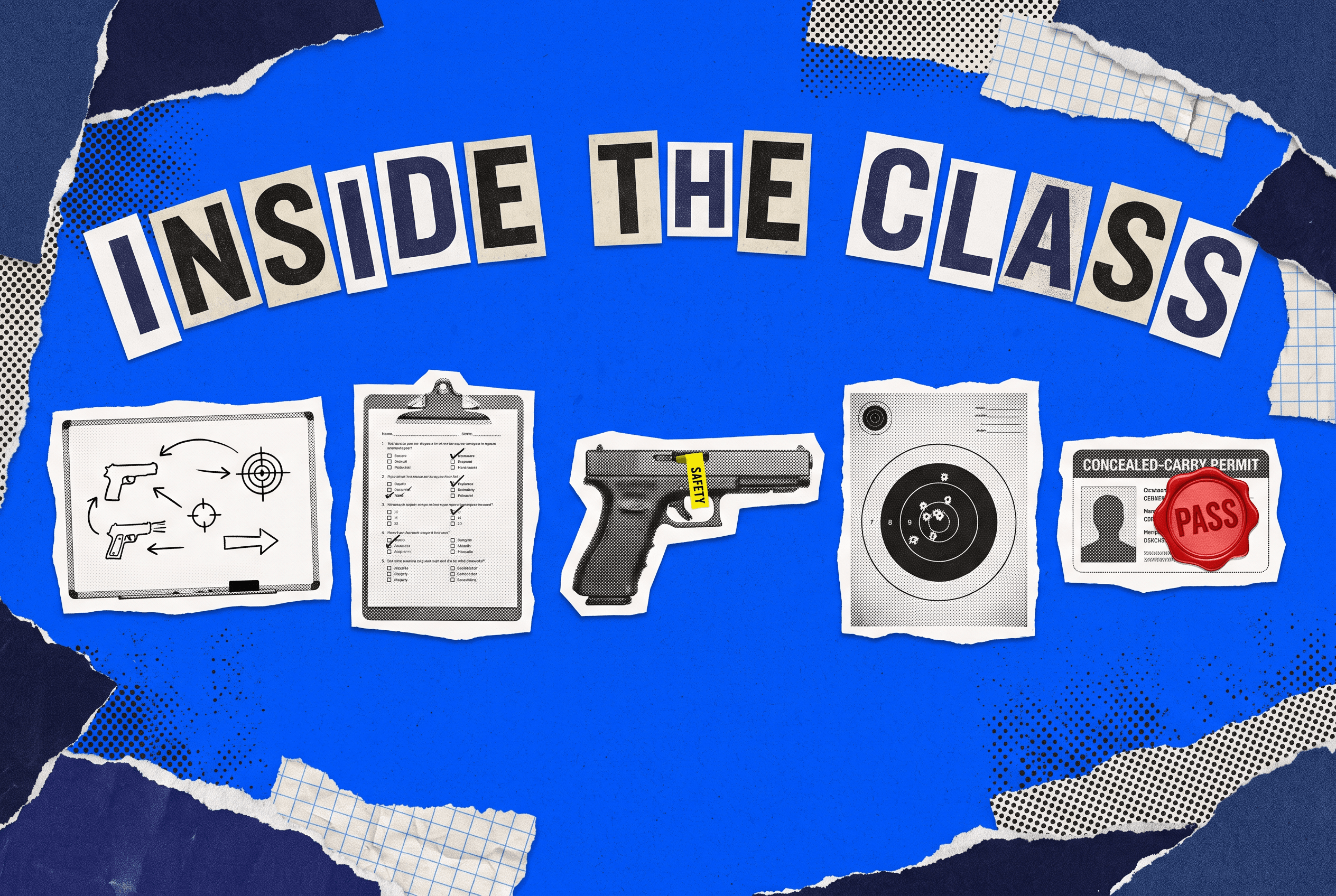
A concealed carry class is classroom instruction followed by a live-fire qualification, and the shooting test is shorter than most people expect.
If you've found a course and haven't booked it yet, the reason is usually not the date or the cost. It's not knowing what the day involves, and quietly suspecting you'll be the least competent person in the room. Every course page tells you the schedule and the price, and none of them tells you what the day is actually like.
So here's the walkthrough, using the most detailed published standard in the country as the map. If you're still deciding whether training makes sense before you buy at all, our guide on taking a gun safety class before you buy covers that question separately.
Key takeaways
-
Requirements vary enormously by state, from no training requirement at all to New York's 16 classroom hours.
-
The day splits into two parts: classroom instruction, then a live-fire qualification on the range.
-
New York's live-fire assessment is five rounds fired at 4 yards, with at least four of the five needing to land on target.
-
A written test typically follows, covering the material you were just taught.
-
Many courses provide the firearm and ammunition, so you generally don't need to own one to attend.
The short version
Classroom, then range, then a test. The classroom covers handling, law, marksmanship principles, and situational awareness. The range portion is a qualification rather than a competition, at close distance. The written test covers what you just spent the day learning. How long the whole thing takes depends entirely on your state.
Where the detail comes from. New York publishes the most fully documented standard in the country, so this article uses it as the map for what these courses cover. New York is the strictest end of the range, not the typical case. Many states require far less, and some require no training at all. The curriculum below is from the New York State Police Minimum Standards for Concealed Carry Firearm Safety Training, issued August 23, 2022, read in full on September 2, 2026.
What happens in a concealed carry class?
A concealed carry class runs classroom instruction on handling, law, and marksmanship, then a live-fire qualification on the range. That two-part shape is consistent almost everywhere, even though the hours attached to each part vary a lot.
The classroom portion generally comes first, often across a full day or split over two. The range portion usually happens on the second morning, so you arrive having already covered the handling material rather than learning it with a loaded firearm in your hands. That sequencing is deliberate and it's why the range portion tends to feel manageable.
Then there's an assessment: a shooting qualification and, in many states, a written test. Neither is designed to catch you out.
The classroom hours, broken down
New York publishes the most detailed standard in the country: 16 classroom hours across 12 required topics. Only four of those topics carry a stated minimum time, adding up to 6 hours, and the standard leaves how the remaining hours are distributed to the instructor. The standard states the course "must include 16 hours of in-person live classroom instruction conducted by a Duly Authorized Instructor."
| Classroom topic | Time the standard states |
|---|---|
| General firearm safety: firearm and ammunition function and operation, cleaning and maintenance, handling practices, range rules, holster considerations and retention | 2 hours minimum |
| Firearm storage and secure transportation, as defined in Penal Law sections 265.45 and 265.50 | 1 hour minimum |
| State and federal law, including the possession disqualifiers under 18 U.S.C. section 922(g), private transfer restrictions, and license recertification | 2 hours minimum |
| Marksmanship principles: stance, grip, sight alignment, sight picture, breathing, trigger control | 1 hour minimum |
| Situational awareness, firearm display and concealment; conflict de-escalation; conflict management | No minimum stated |
| Adverse effects of alcohol and drug use; suicide prevention, including recognizing risk and where to get help | No minimum stated |
| Best practices when encountering law enforcement; the sensitive and restricted places listed in Penal Law sections 265.01-e and 265.01-d | No minimum stated |
| Use of deadly physical force, including when a duty to retreat applies under Penal Law section 35.15(2) | No minimum stated |
| Total classroom instruction | 16 hours, of which 6 carry a stated minimum |
Two of those topics, use of deadly physical force and encounters with law enforcement, are exactly the kind of material that belongs in a room with a certified instructor who can answer follow-up questions, rather than in an article. We're naming them so you know they're on the schedule, and leaving them there.
The rest is more familiar than it looks. Half of the time the standard actually allocates goes to handling and marksmanship, which is the practical material, and the legal portion connects directly to the federal eligibility rules our guide on knowing what's legal where you live touches on.
How much does your state actually require?
Requirements range from no training at all to New York's 16 classroom hours, so the course length in your state may look nothing like the table above. This is the single most important caveat on this page.
Many states sit in the middle, commonly requiring around eight hours, and a number of states have no training requirement for a permit or operate constitutional carry, where a permit isn't required to carry in the first place. Our guide to open carry, concealed carry, and constitutional carry covers how those systems differ.
What this means practically: use the New York breakdown to understand what the material is, then confirm the actual hours and requirements where you live. The topics are broadly similar across states even when the time allotted isn't.
The range day and the qualification
The live-fire portion is a qualification rather than a competition, and under the New York standard it is shorter than almost anyone expects. The standard requires 2 hours of live-fire training first, covering range rules, drawing and re-holstering, dry firing, loading and unloading, and condition checks. The assessment comes after that.
Here is the whole assessment, as the standard sets it out. You perform a condition check to show the firearm is empty. You draw from concealment with no ammunition loaded, acquire a target, and re-holster. You load five rounds, hold a ready position, and on the instructor's command fire all five from a standing position at a distance of 4 yards, at a paper target measuring 25 and a half inches by 11 inches. At least four of the five must be on target. Then you perform a final condition check.
Four yards is close. It is about the width of an average living room, nearer than most people picture when they imagine a shooting test. The assessment is asking whether you can handle the firearm correctly and put four of five rounds on a sheet of paper at conversational distance, not whether you can shoot tight groups or beat a clock. The standard also lets instructors run the assessment with non-lethal training ammunition rather than live rounds.
Most range portions begin with dry-fire practice and a run through the fundamentals before anything is loaded, so you're not walking straight from a classroom onto a firing line. If you've never been to a range, our guide to your first trip to the range covers the parts nobody explains.
What the written test is like
The written test covers the material just taught, and under the New York standard you need a minimum correct answer score of 80 percent to pass. The standard does not set a question count, so the length is up to the instructor. It comes at the end of instruction rather than as an entry requirement, which is the detail that changes how people feel about it.
You're not expected to arrive knowing gun law. You're expected to pay attention during the hours on gun law and then answer questions about those hours. Instructors teach the test material because the whole point of the course is that you leave able to answer it.
If you're still assembling the firearm and gear side of this before booking a course, the Find My Gun Kit quiz handles that end.
What should you bring, and do you need your own gun?
Many courses provide a firearm and ammunition, and the things you actually need are eye and ear protection, closed-toe shoes, and a full day. Check when you book, since some courses expect you to bring your own firearm and others prefer you don't.
Practical details worth planning for: wear a high-necked top, since spent brass ejects hot and a scoop neck catches it. Bring lunch or find out whether there's a break long enough to leave. Bring a notepad, because there's genuinely a lot of material and the legal portion is the part people forget first.
If you're bringing your own firearm, bring the holster you actually intend to use rather than borrowing one on the day. Our guide to picking your first concealed carry holster covers that choice.
Walking in without the nerves
Everyone in the room is there because they haven't done this before, which is the entire reason the course exists. Instructors run these classes constantly and spend most of their time with people handling a firearm for roughly the second or third time in their lives.
The numbers help too. Five rounds at 4 yards, four of which need to be on a sheet of paper, and a test on material you were taught that morning, is a genuinely different proposition from what most people imagine when they picture a shooting exam. Knowing the actual requirements is usually enough to get the booking made.
American Gun Owners treats the class as part of the purchase rather than homework that comes after it. Every kit carries training access, so the course you just read about is lined up with the firearm instead of being one more thing to go source. Haven't picked the firearm yet? The Find My Gun Kit quiz takes a couple of minutes.
Frequently Asked Questions
How long is a concealed carry class?
It depends entirely on your state. New York requires 16 hours of classroom instruction plus 2 hours of live-fire training, which is at the demanding end. Many states require around eight hours, and some require no training at all. Confirm what applies where you live before assuming a course length.
Do you have to shoot in a concealed carry class?
In states with a live-fire requirement, yes, and that portion is a qualification rather than a test of marksmanship. Under the New York standard the assessment is five rounds fired at 4 yards, with at least four landing on target. Some states have no live-fire component at all, so this varies with local requirements.
What happens if you fail the shooting qualification?
Policies are set by the instructor and the state rather than nationally, and re-attempts are common. Many instructors will work with you on the line before it counts, since their interest is in you passing rather than in filtering people out. Ask about the re-test policy when you book if it's on your mind.
Do you need your own gun for the class?
Often not. Many courses provide a firearm and ammunition, which is part of why a class is a reasonable step before buying anything. Confirm when you book, since some courses do expect you to bring your own, and a few prefer that you use theirs for consistency.
Does the class give you the permit?
No. The class produces a certificate of completion, which is one piece of a permit application you then submit to the issuing authority where you live. The application process, its fees, and the time it takes are separate from the course and vary by state.
Sources
- New York State Police, Minimum Standards for New York State Concealed Carry Firearm Safety Training, issued August 23, 2022: troopers.ny.gov
Related
We strive to provide accurate, up-to-date information to help first-time firearm owners make informed decisions. Because laws and regulations vary and may change, always verify the requirements that apply to your location and follow safe firearm handling practices.